Thanksgiving Dinner Ideas
Thanksgiving dinner ideas always start with the same question: what is going in the middle of the table this year? For some families it has to be a big golden turkey, for others it is a glazed ham or a small, easy main that does not take all day. This list has something for every kind of table — classic birds, clever turkey shortcuts, beef roasts, and a few vegetarian mains that hold their own next to the gravy.
Classic Roast Turkey
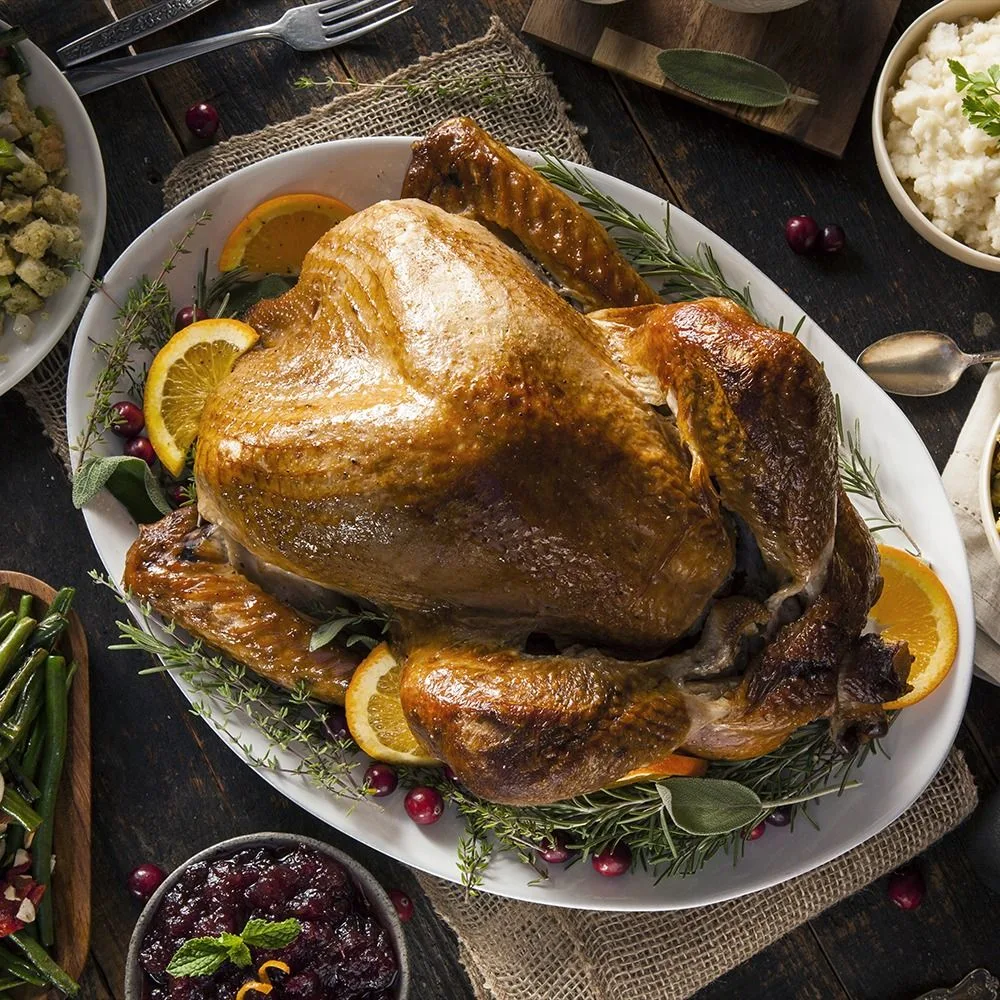
This is the bird most of us picture when we think of Thanksgiving — burnished skin, juicy slices, and a pan of drippings waiting to become gravy. It is the safest choice for a big crowd and the one that makes the best leftovers for sandwiches the next day.
How to make it: Pat a thawed 12–14 lb turkey dry, season inside and out with salt and pepper, and tuck onion, lemon, and fresh herbs into the cavity. Roast at 325°F for about 13 minutes per pound, until the thickest part of the thigh reads 165°F. Rest at least 30 minutes before carving — that rest is what keeps the meat juicy.
Tip: Take the turkey out of the fridge an hour before roasting so it cooks more evenly.
Herb Butter Turkey
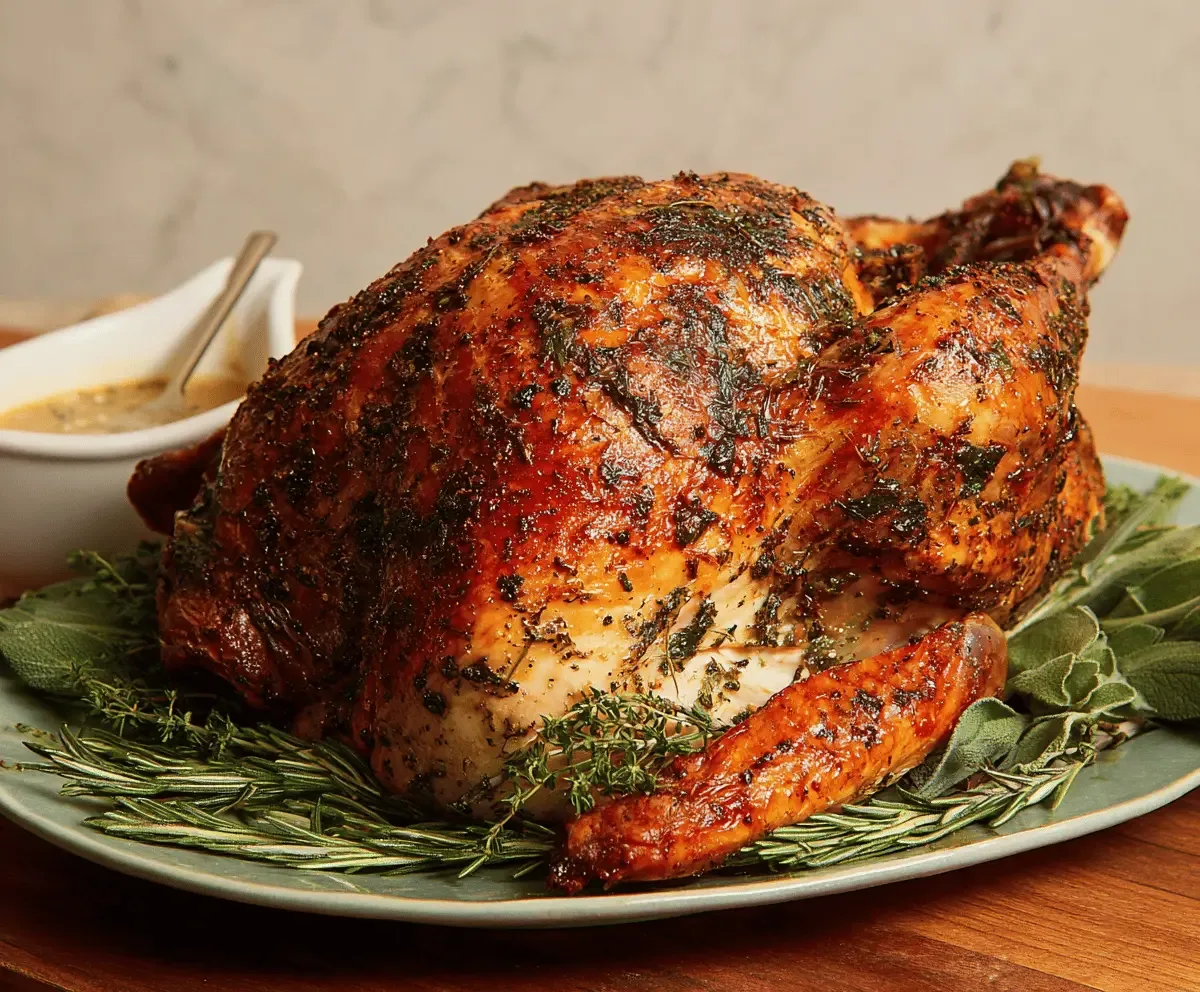
If plain roast turkey feels a little safe, herb butter is the easiest upgrade there is. Soft butter mixed with rosemary, thyme, sage, and garlic gets pushed under the skin, so the meat bastes itself from the inside while the skin turns deep golden and crisp.
How to make it: Mash 1 stick of softened butter with chopped rosemary, thyme, sage, garlic, salt, and pepper. Loosen the skin over the breast and spread two-thirds of the butter underneath, then rub the rest over the outside. Roast at 325°F, basting once or twice with the pan juices, until the thigh reaches 165°F. Rest 30 minutes before carving.
Tip: Make the herb butter a day ahead and chill it — cold butter is easier to spread under the skin.
Dry-Brined Turkey
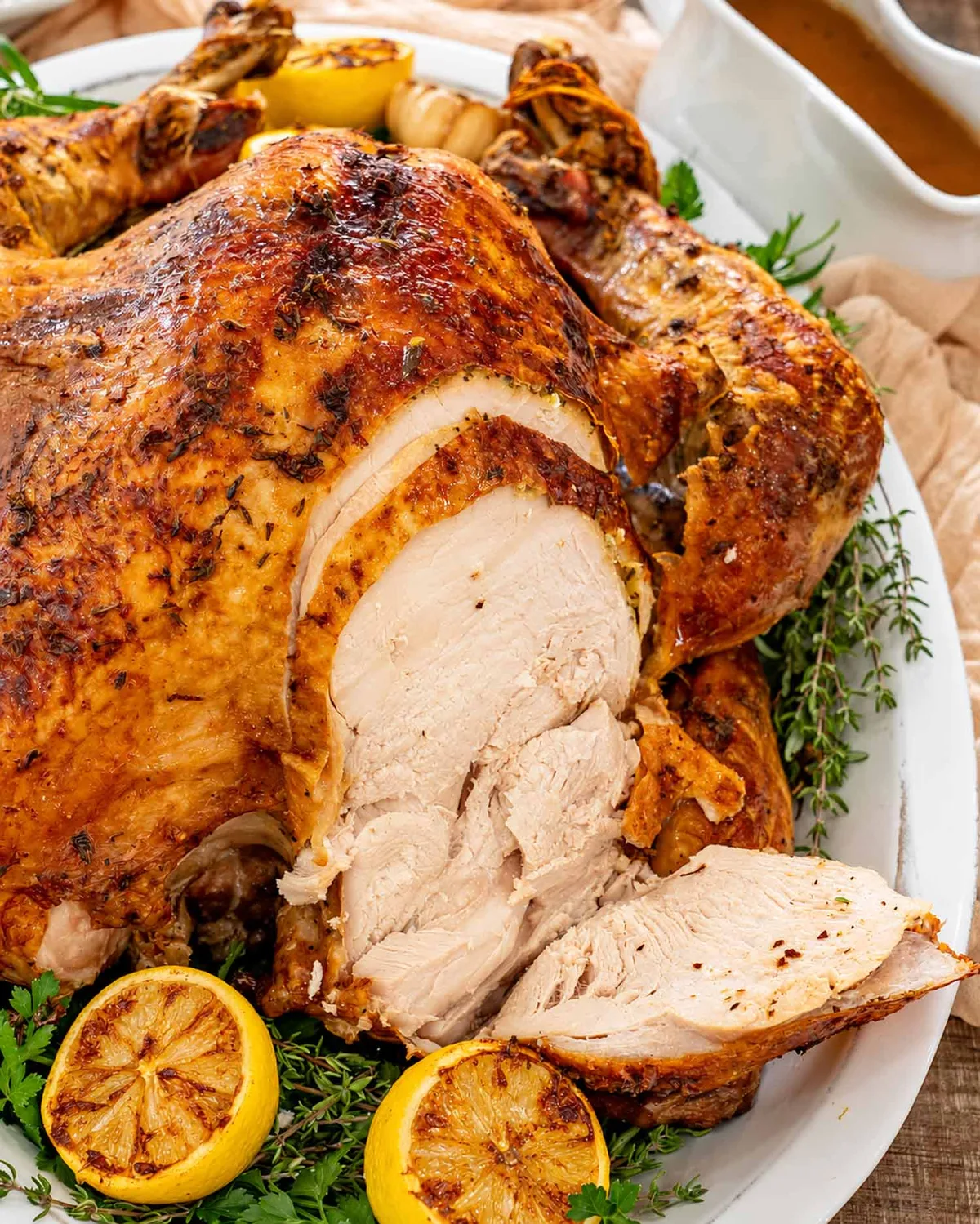
Dry brining sounds fancy, but it is really just salting the bird early. The salt draws out moisture, then pulls it back in seasoned, giving you deeply flavoured meat and the crispest skin of any method here — with no bucket of brine taking over your fridge.
How to make it: Two to three days before, rub the turkey all over with kosher salt (about 1 teaspoon per pound) plus a little black pepper and dried herbs if you like. Leave it uncovered on a rack in the fridge. On the day, do not rinse — just pat dry, add a little butter or oil, and roast at 325°F until the thigh hits 165°F.
Tip: The uncovered fridge time is the secret — dry skin is what crisps, so do not wrap the bird.
Turkey Breast for Small Gatherings
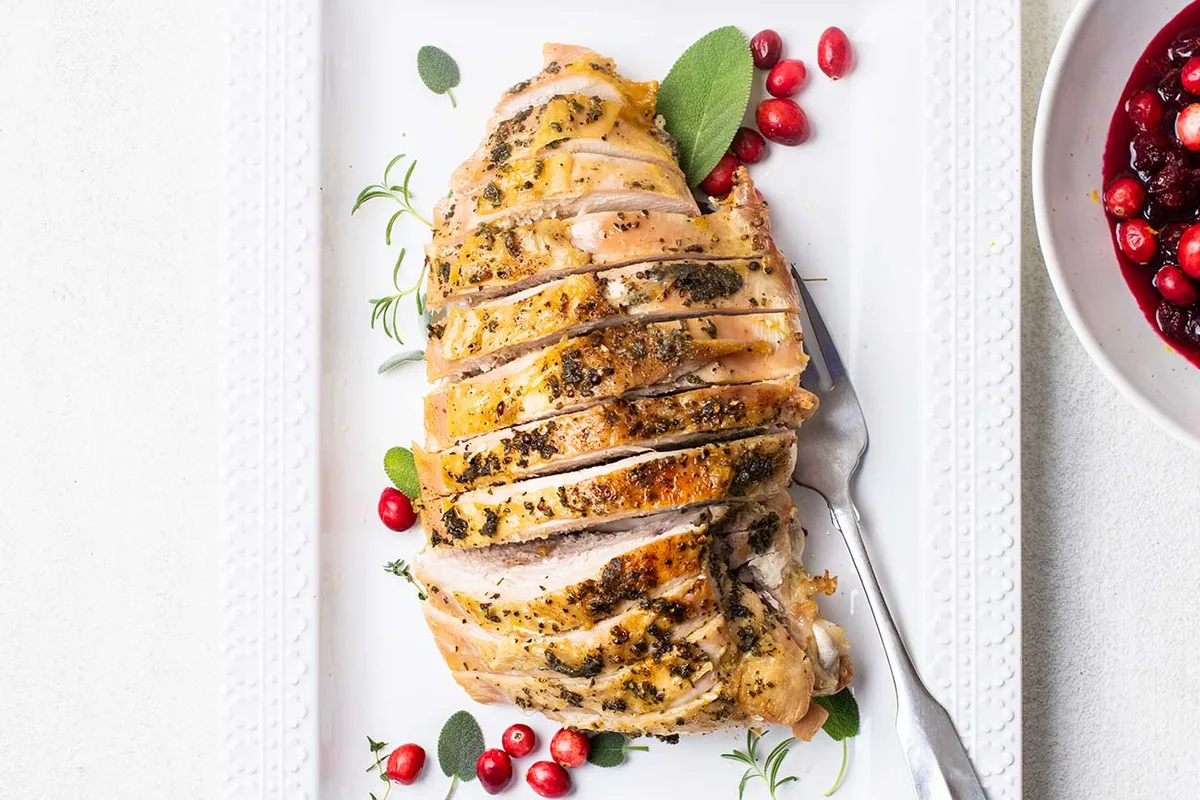
Not everyone needs a whole bird. A bone-in turkey breast gives you the same roast-turkey moment for four to six people, cooks in about half the time, and is all white meat — which, in a lot of families, is the part everyone actually fights over.
How to make it: Rub a 3–4 lb bone-in turkey breast with butter, salt, pepper, garlic powder, and paprika. Roast at 325°F for about 20 minutes per pound, until the thickest part reads 160–165°F. Rest 15 minutes, then slice thickly against the grain.
Tip: A breast is much harder to dry out if you pull it at 160°F and let carryover heat finish the job while it rests.
Turkey Roulade
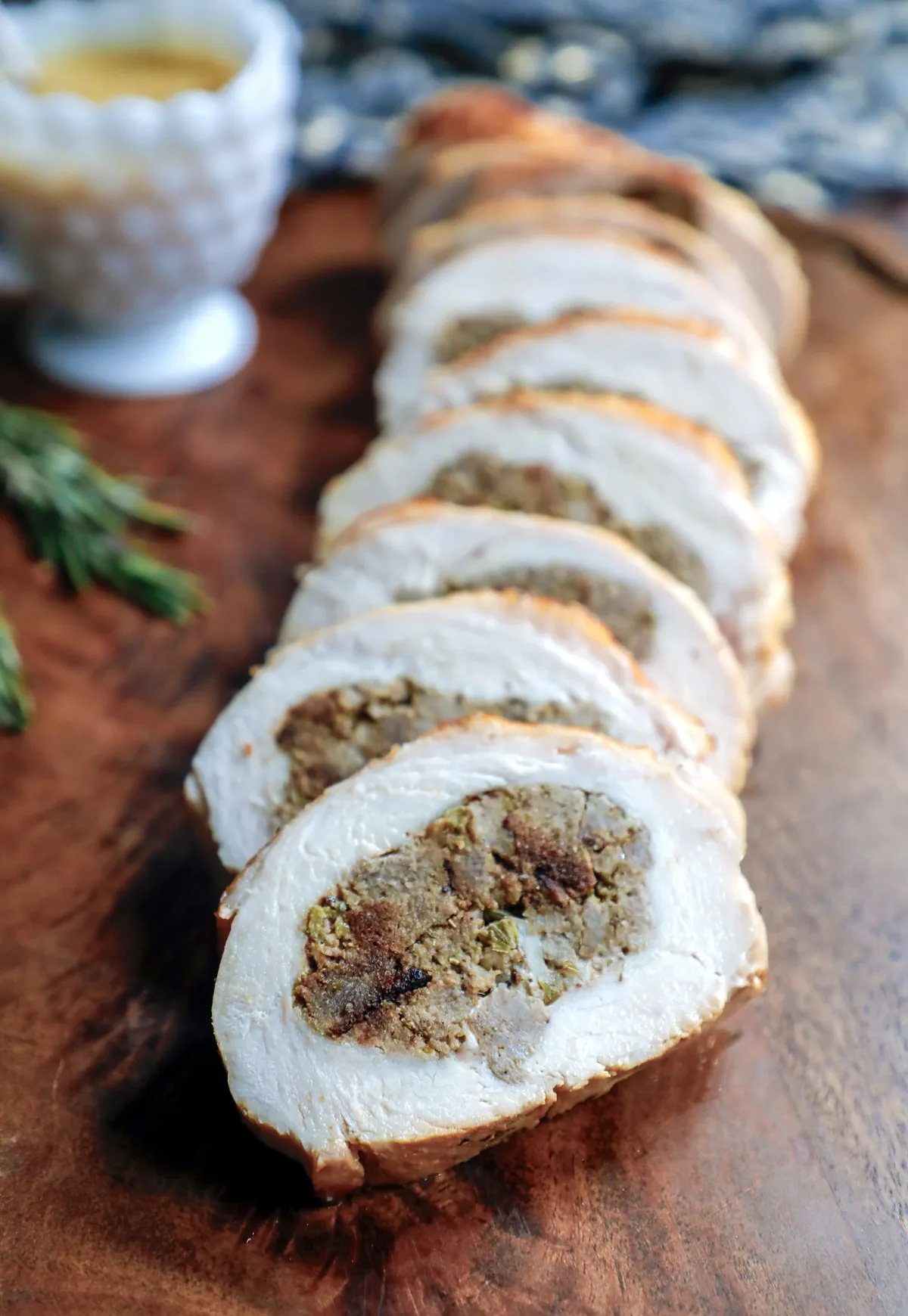
A roulade is a boneless turkey breast butterflied, spread with stuffing, and rolled into a neat spiral. Every slice shows off the filling, it cooks evenly, and it carves like a dream — no bones, no fuss, very dinner-party pretty.
How to make it: Butterfly a boneless turkey breast and pound it to an even thickness. Spread over a layer of your favourite stuffing — a cranberry, herb, or sausage one all work — then roll it up tightly and tie with kitchen string. Sear in a hot pan until golden all over, then roast at 375°F for about 1 hour, to 165°F in the centre. Rest, remove the string, and slice into rounds.
Tip: Chill the rolled, tied breast for 30 minutes before searing — it holds its shape much better.
Smoked Turkey
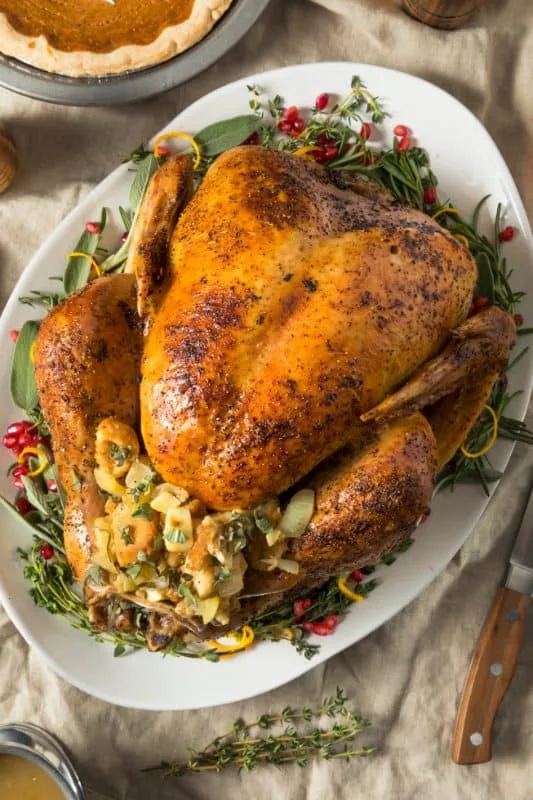
For the family member who treats the smoker like a second kitchen, this is their moment. A smoked turkey comes out mahogany-dark, gently smoky all the way through, and it frees up your oven completely for pies and sides — which might be the best reason of all.
How to make it: Brine the turkey overnight if you like, then pat dry and season with a simple salt, pepper, garlic, and paprika rub. Smoke at 225–250°F with apple or cherry wood, about 30–40 minutes per pound, until the breast reads 165°F and the thigh 175°F. Rest 30 minutes before carving.
Tip: Spatchcocking the bird (removing the backbone and flattening it) cuts the smoking time nearly in half and cooks it more evenly.
Deep-Fried Turkey
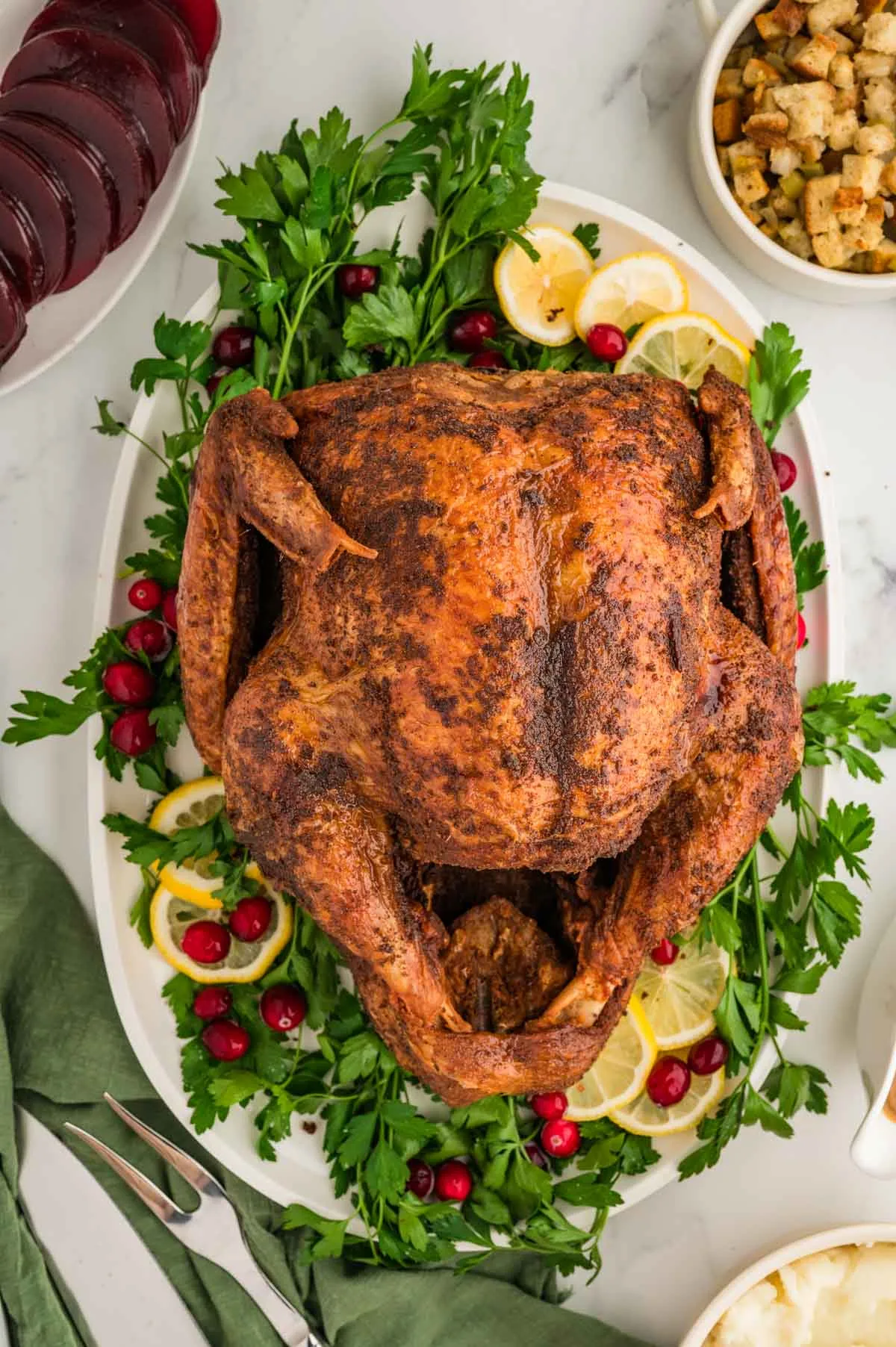
Deep-fried turkey is the fastest way to cook a whole bird — under an hour — and the skin shatters like nothing from an oven. The meat stays incredibly juicy. It is a backyard tradition across the South, and once you have tried it, you understand why.
How to make it: This one is outdoors-only, on a flat surface away from the house, in a proper turkey fryer. Heat peanut oil to 350°F. Use a fully thawed, completely dry turkey (12–14 lb), seasoned or injected with marinade. Lower it in very slowly and fry for about 3½ minutes per pound, keeping the oil at 350°F. Rest 20–30 minutes before carving.
Tip: Never fry a frozen or wet bird — thaw it fully and pat it bone dry. Water and hot oil are a dangerous mix.
Slow Cooker Turkey Breast
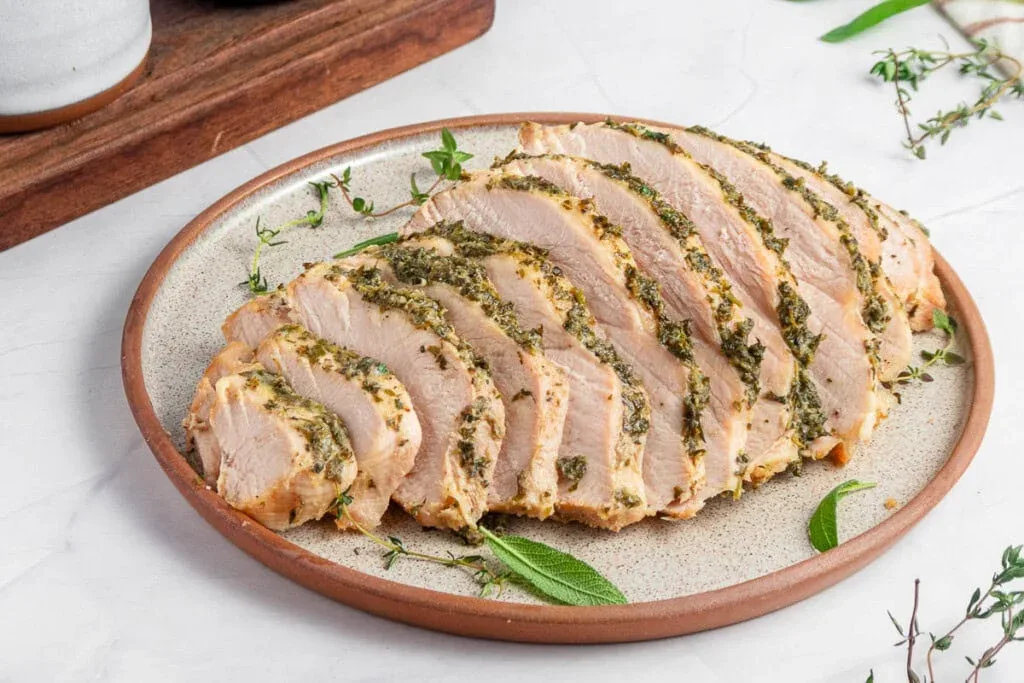
The slow cooker version is for anyone who wants Thanksgiving dinner to basically cook itself. The breast gently poaches in its own juices all afternoon and comes out so tender it nearly slices itself, while your oven stays free for everything else.
How to make it: Rub a boneless or bone-in turkey breast (3–4 lb) with butter and your favourite poultry seasoning, and set it on a bed of sliced onions in the slow cooker with a splash of chicken broth. Cook on low for 6–7 hours, until it reaches 165°F. For crisp skin, pop it under a hot broiler for 3–4 minutes at the end.
Tip: The cooking liquid makes wonderful gravy — strain it, then thicken it in a pan with a butter-and-flour roux.
Maple Glazed Spiral Ham
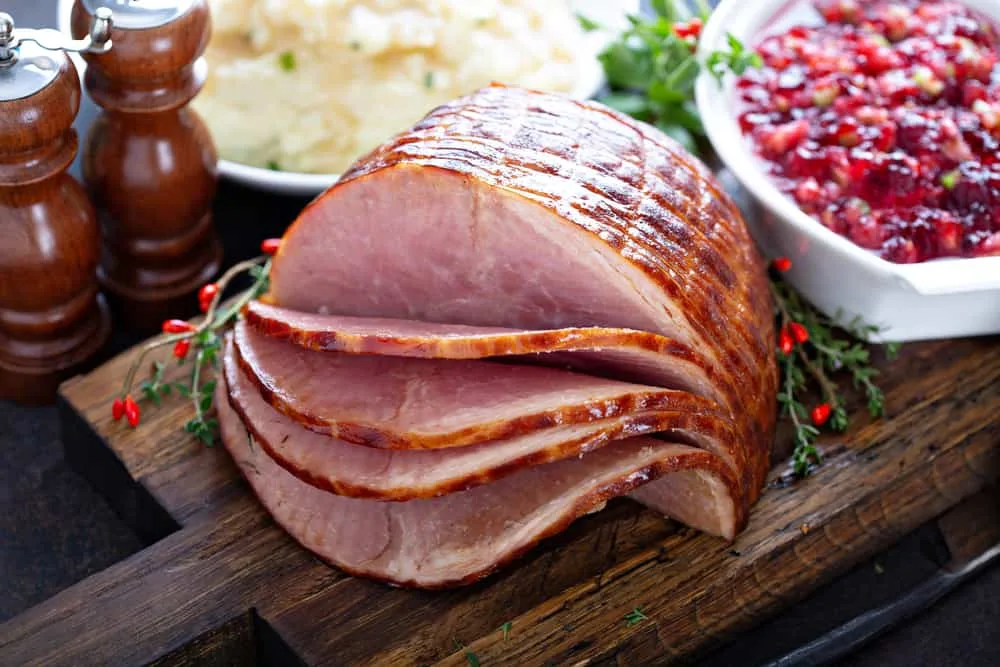
A spiral ham is the kindest main you can choose: it arrives fully cooked and pre-sliced, so your whole job is warming it through and brushing on a shiny maple glaze. It feeds a crowd with almost zero stress, and the leftovers are legendary.
How to make it: Set a spiral-cut ham in a roasting pan with a little water, cover tightly with foil, and warm at 325°F for about 10 minutes per pound. Meanwhile, simmer maple syrup with a spoonful of Dijon mustard and a pinch of cloves. Uncover for the last 30 minutes and brush the glaze on twice, letting it go sticky and caramelised at the edges.
Tip: Serve the extra warm glaze in a little jug at the table — people will pour it on everything.
Brown Sugar Glazed Ham
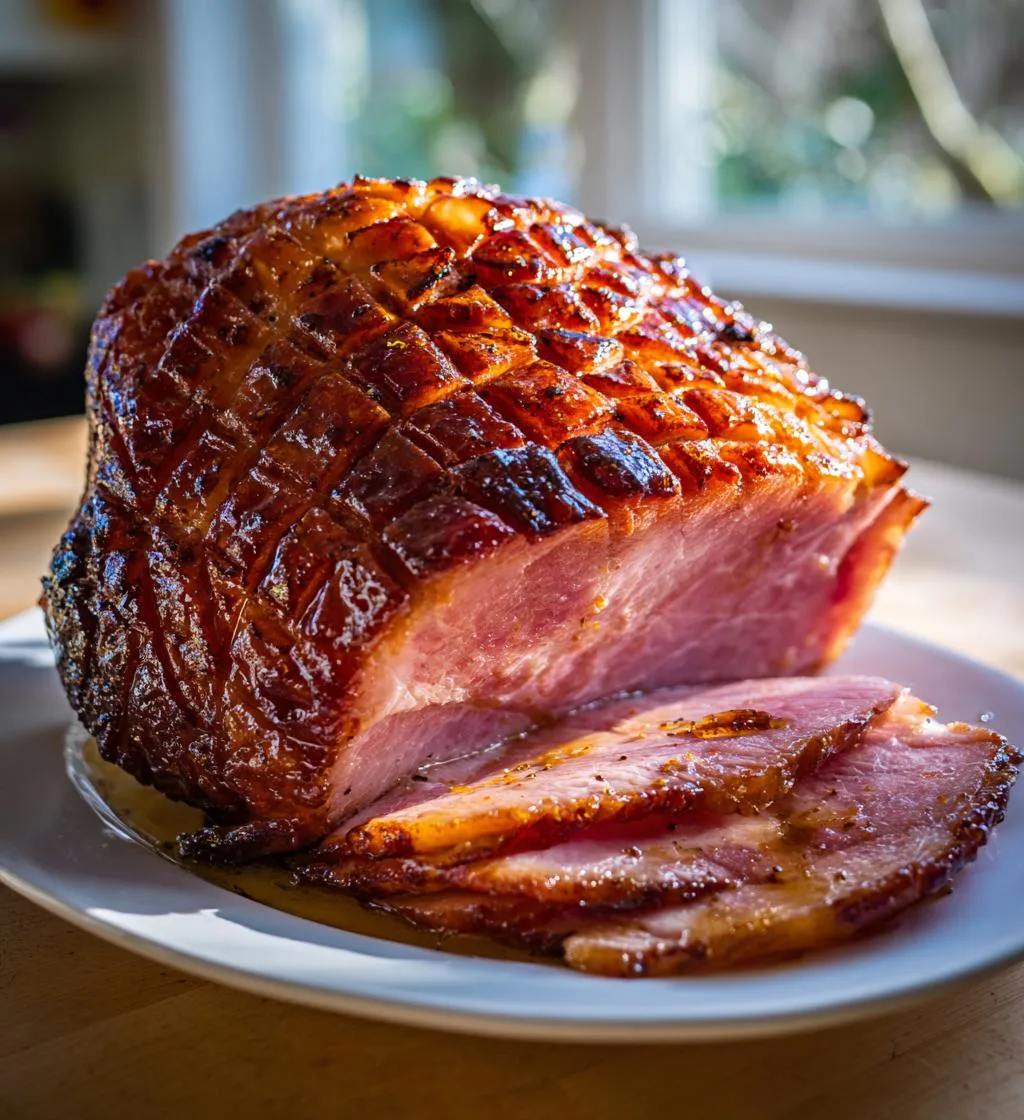
This is the old-fashioned holiday ham — scored in diamonds, studded with cloves if you are feeling traditional, and shellacked with a brown sugar glaze that turns into a crackly, sweet crust. It sits next to turkey happily, and plenty of families insist on both.
How to make it: Score the fat of a bone-in smoked ham in a diamond pattern and place it in a roasting pan. Bake covered at 325°F for about 15 minutes per pound. Stir brown sugar, honey, Dijon mustard, and a splash of apple cider vinegar into a thick paste, spread it over the ham for the last 30–45 minutes, and baste a few times until glossy and dark at the edges.
Tip: Let the ham rest a full 20 minutes — the glaze sets into that lovely sticky coating as it cools slightly.
Prime Rib Roast
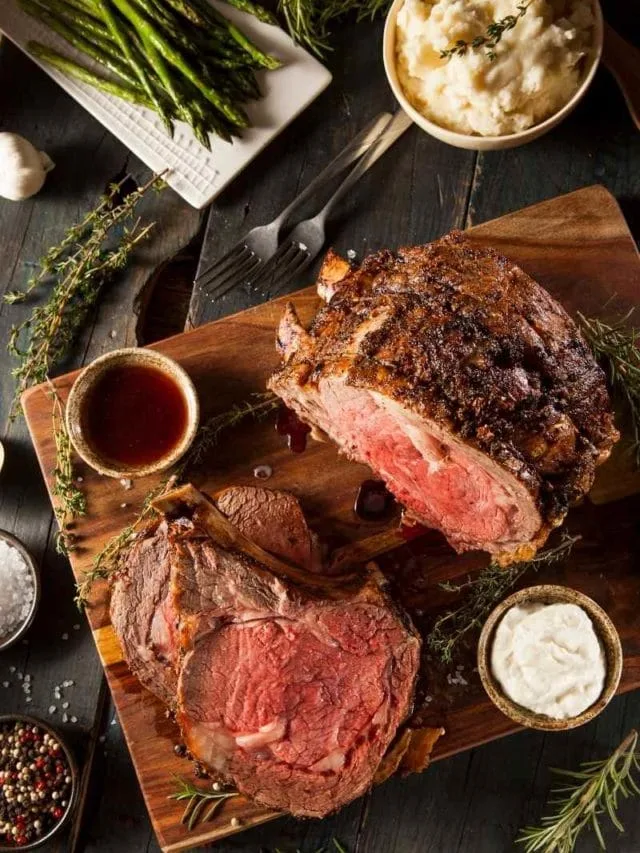
If your family is more beef than bird, prime rib is the showstopper. A standing rib roast with a salty, garlicky crust and a rosy medium-rare centre makes the whole table go quiet when you slice it. Serve it with the turkey gravy anyway — nobody will complain.
How to make it: Salt the roast a day ahead and leave it uncovered in the fridge. On the day, bring it to room temperature, rub with garlic, rosemary, and black pepper, and roast low at 225–250°F until the centre reads 120–125°F for medium-rare. Rest 30 minutes, then give it a final 8–10 minute blast at 500°F for a deep crust (or sear first and roast low — both work).
Tip: A meat thermometer is not optional here. Prime rib is too special to guess — pull it 5 degrees early, as it keeps cooking while it rests.
Beef Tenderloin
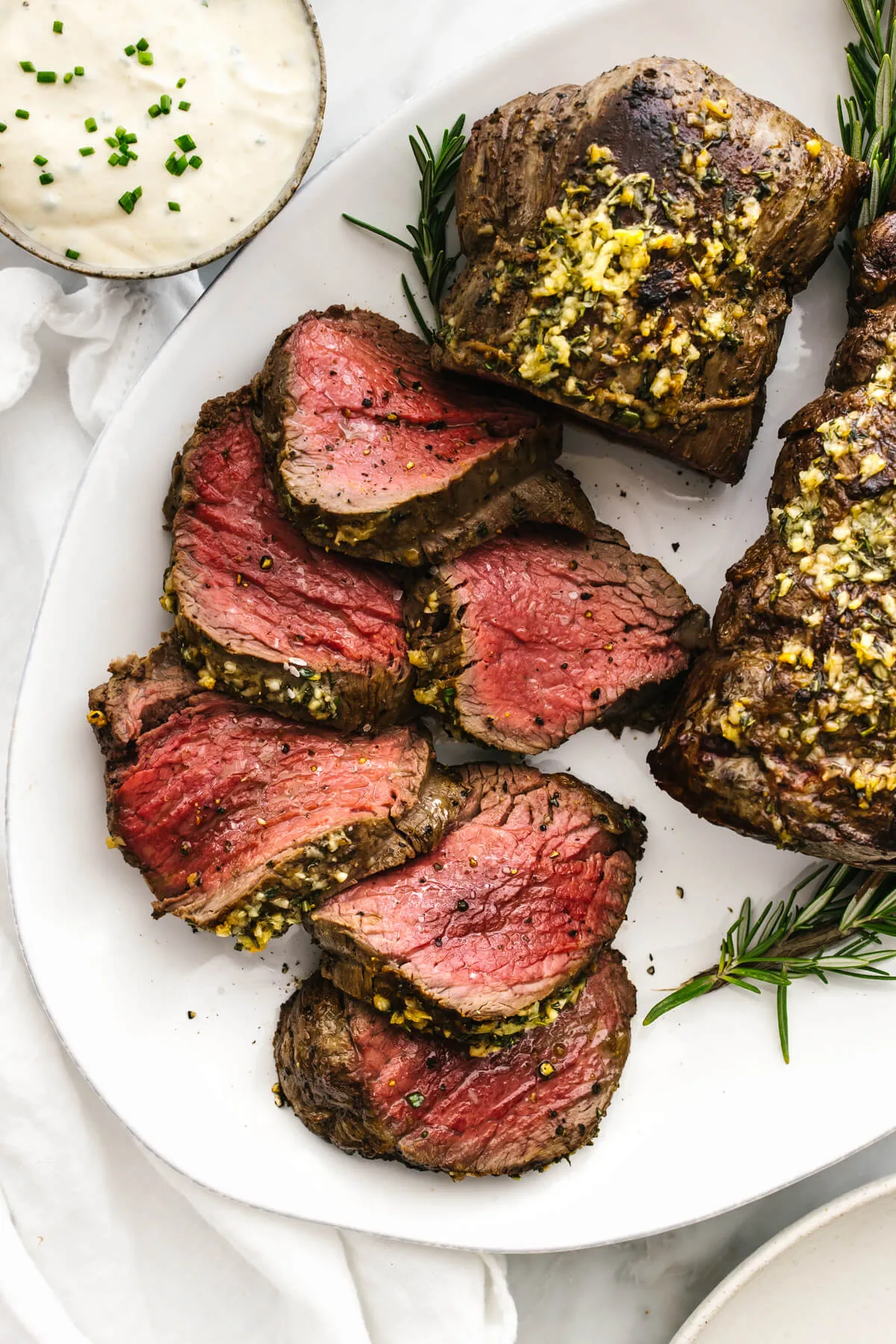
Tenderloin is the elegant option: the most tender cut of beef, lean and mild, roasted whole and sliced into thick, buttery medallions. It cooks fast, carves beautifully, and loves a creamy horseradish sauce on the side.
How to make it: Tie a trimmed whole tenderloin (3–4 lb) with string at even intervals so it cooks evenly, and season generously with salt, pepper, and garlic. Sear it in a hot oven-safe pan on all sides until deeply browned, then roast at 425°F for about 25–35 minutes, until the centre reads 125–130°F for medium-rare. Rest 15 minutes before slicing.
Tip: Ask for the centre-cut (chateaubriand) piece if you can — the even thickness means no overcooked ends.
Herb Roasted Chicken
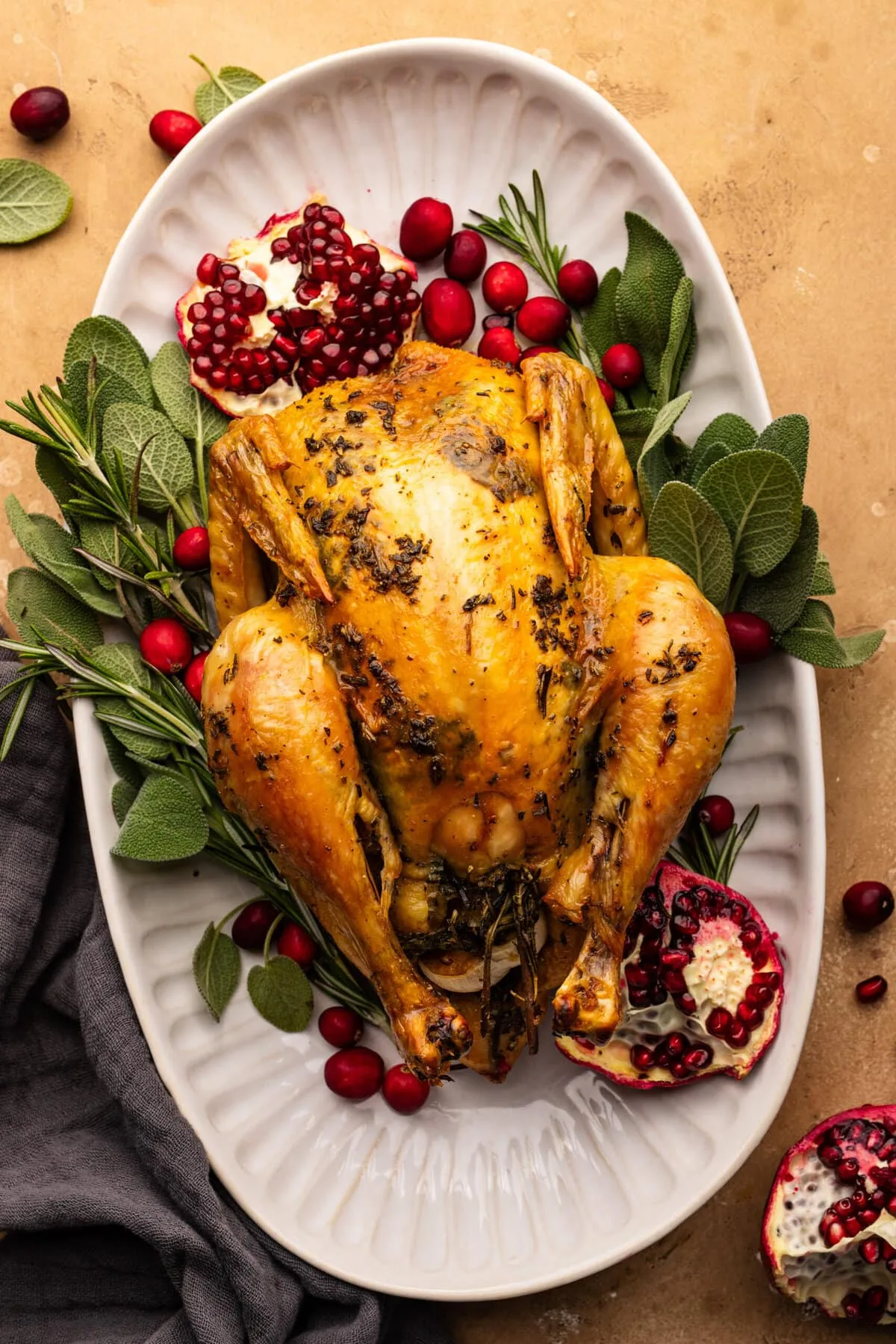
A simple roast chicken is the right answer for a small Thanksgiving — two to four people, no leftovers mountain, no giant bird to wrestle with. Done well, with crisp skin and lemon and herbs in the cavity, it feels every bit as festive.
How to make it: Pat a whole chicken (about 4 lb) very dry, rub with butter, salt, pepper, and chopped herbs, and stuff the cavity with lemon halves and garlic. Truss the legs, then roast at 425°F for about 1 hour to 1 hour 20 minutes, until the thigh reads 165°F. Rest 15 minutes before carving.
Tip: Dry skin is crisp skin — if you have time, salt the chicken and leave it uncovered in the fridge overnight.
Cornish Game Hens
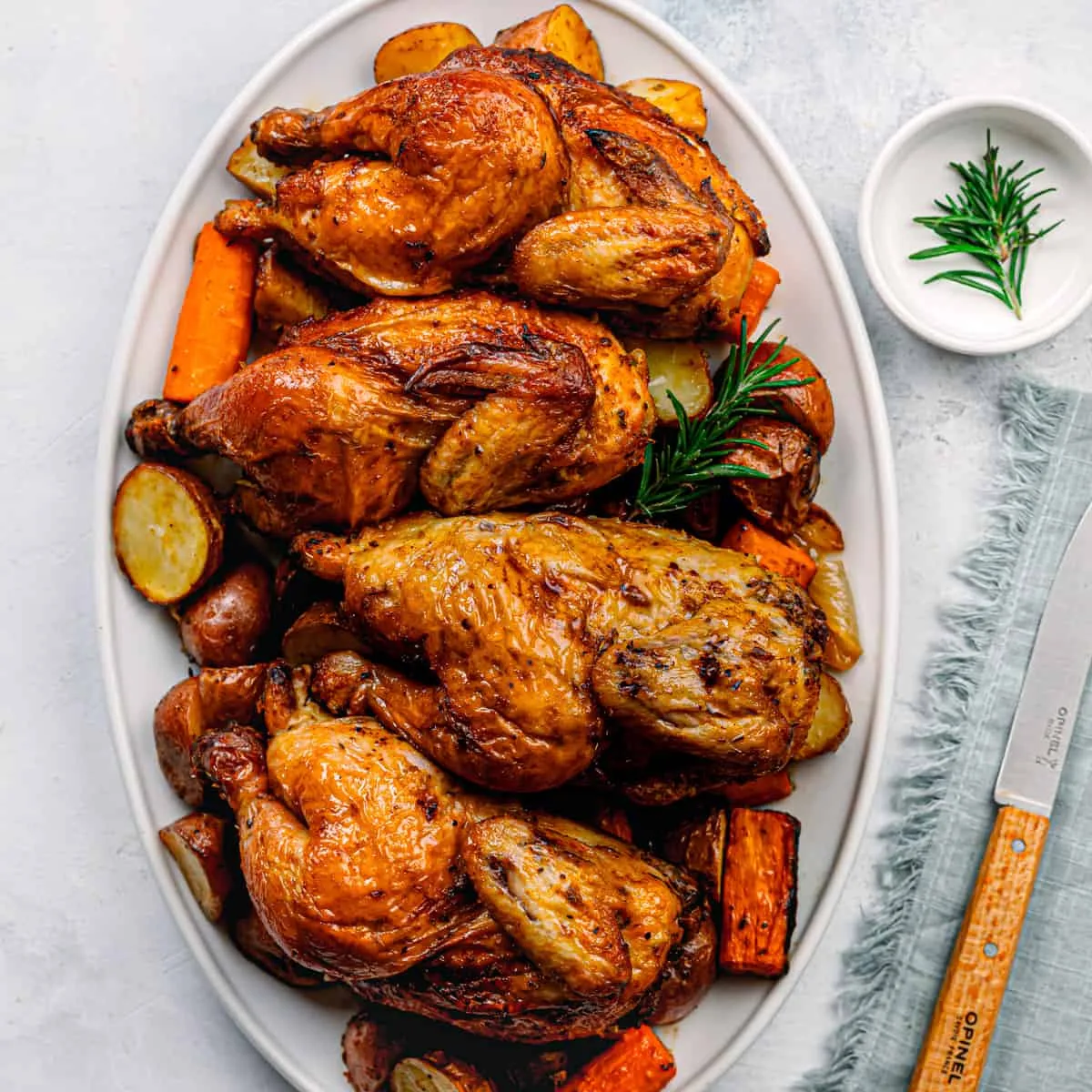
One little hen per person might be the most charming of all Thanksgiving dinner ideas on this list. Everyone gets their own golden bird, there is no carving battle at the table, and the presentation looks like something from a magazine with almost no extra work.
How to make it: Rub each hen inside and out with butter, salt, pepper, and herbs, and tuck a lemon wedge and garlic clove inside each one. Roast at 400°F for about 45–55 minutes, until the skin is deep golden and the juices run clear (165°F at the thigh). Rest 10 minutes and serve whole, one per plate.
Tip: A spoonful of wild rice stuffing inside each hen makes them feel extra special and soaks up the juices beautifully.
Stuffed Acorn Squash
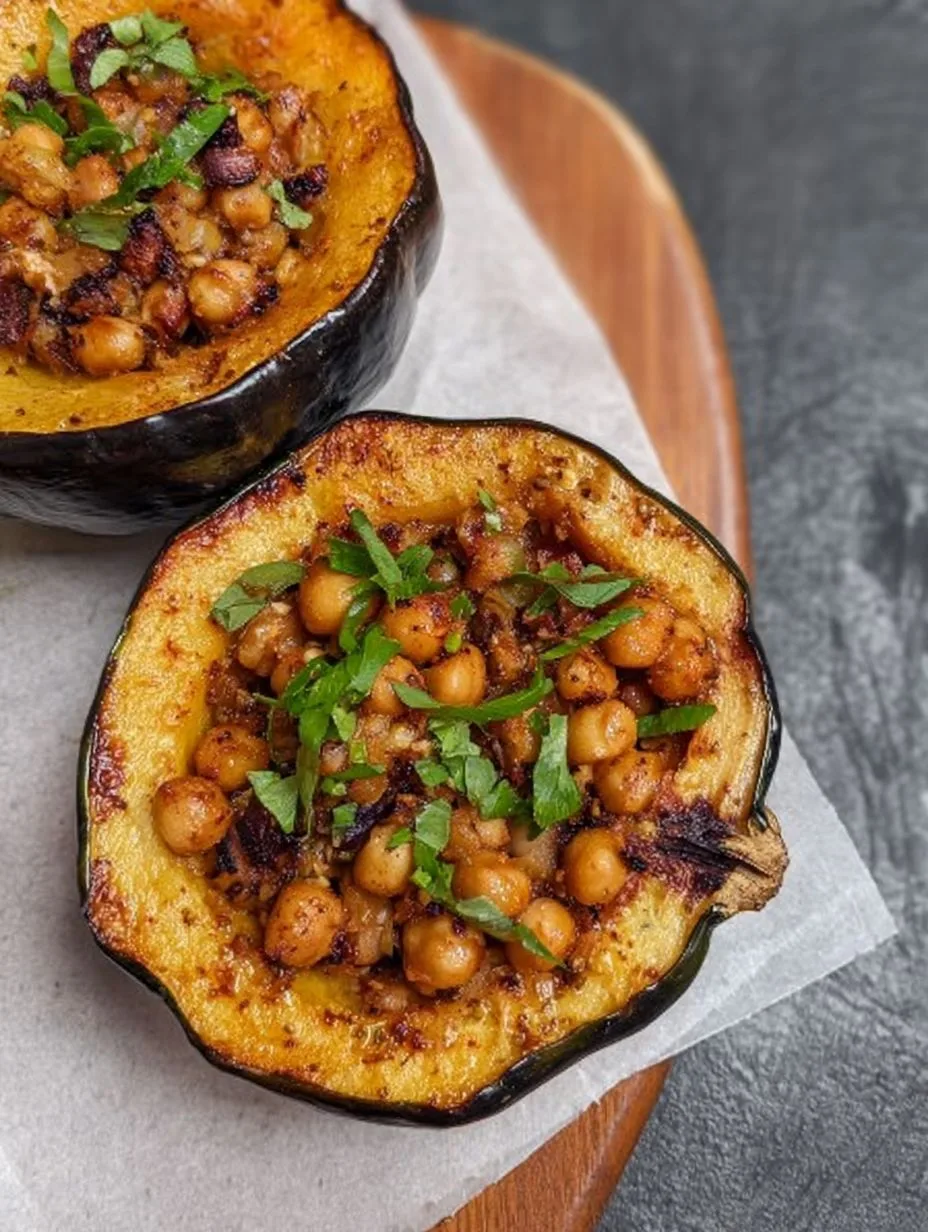
Every table needs a vegetarian main that is a real dinner, not an afterthought, and stuffed acorn squash is exactly that. Sweet roasted squash halves filled with herby grains, cranberries, and pecans look gorgeous and eat like a complete meal.
How to make it: Halve acorn squashes, scoop out the seeds, brush with oil and a little maple syrup, and roast cut-side down at 400°F for about 30 minutes, until tender. Meanwhile cook quinoa or wild rice and stir through sautéed onion, celery, sage, dried cranberries, and toasted pecans. Fill the squash halves generously and bake another 10–15 minutes until everything is hot and the edges caramelise.
Tip: A crumble of goat cheese or feta on top at the end adds the salty bite that makes the sweet squash sing.
Whole Roasted Cauliflower
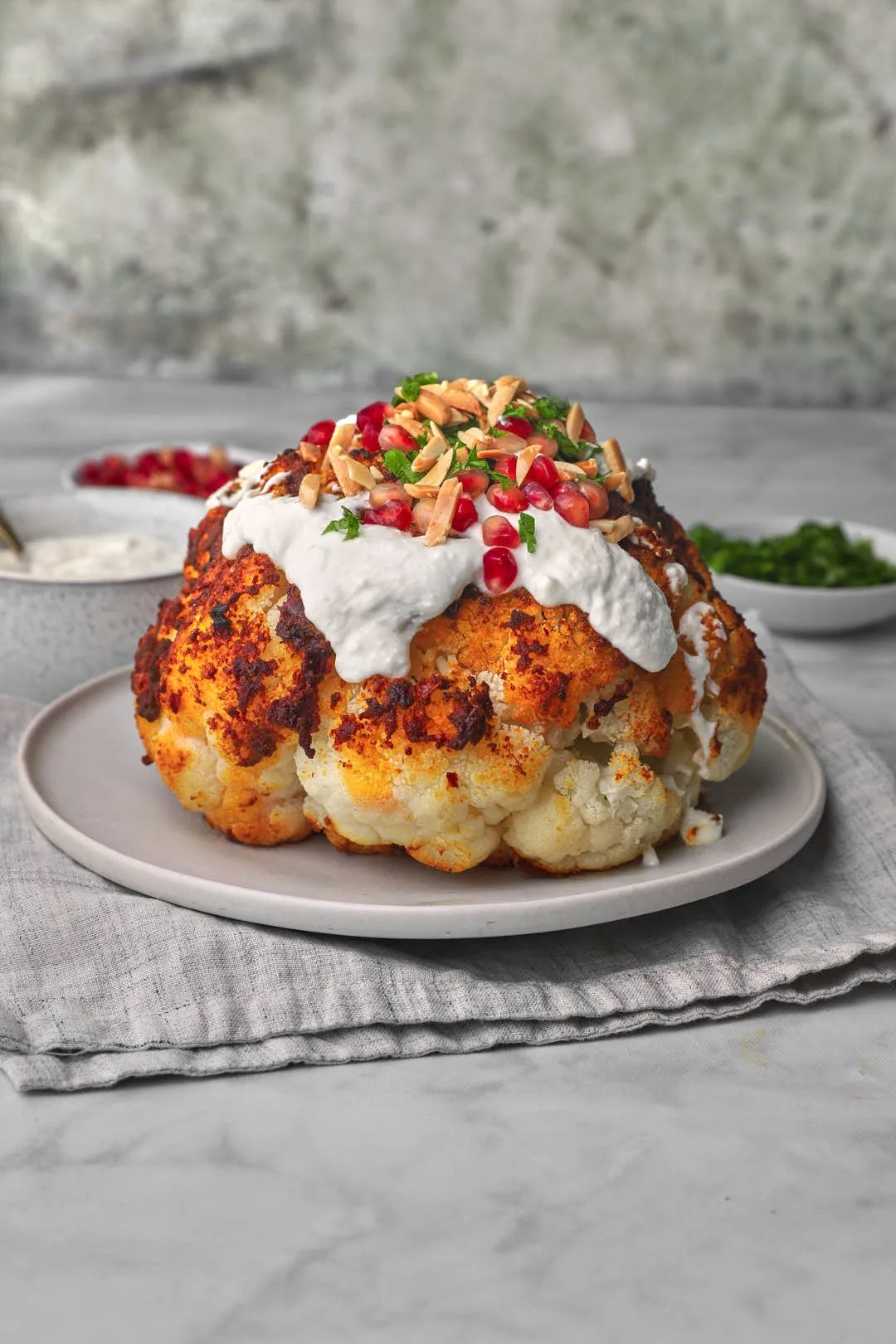
Roasting a cauliflower whole turns the humblest vegetable into a centrepiece. It comes to the table golden and dramatic, gets carved into wedges like a roast, and soaks up whatever sauce you spoon over it — romesco, tahini, or a herby chimichurri all work.
How to make it: Trim the leaves and base of a whole cauliflower so it sits flat. Rub it all over with olive oil, smoked paprika, cumin, garlic, and salt. Roast at 400°F for 45–60 minutes, until deeply golden and tender all the way through (a knife should slide into the centre easily). Serve it on a pool of sauce and scatter with herbs and toasted nuts.
Tip: A quick 5-minute simmer in well-salted water before roasting seasons the cauliflower right to the middle and guarantees a tender centre.
Mushroom Wellington
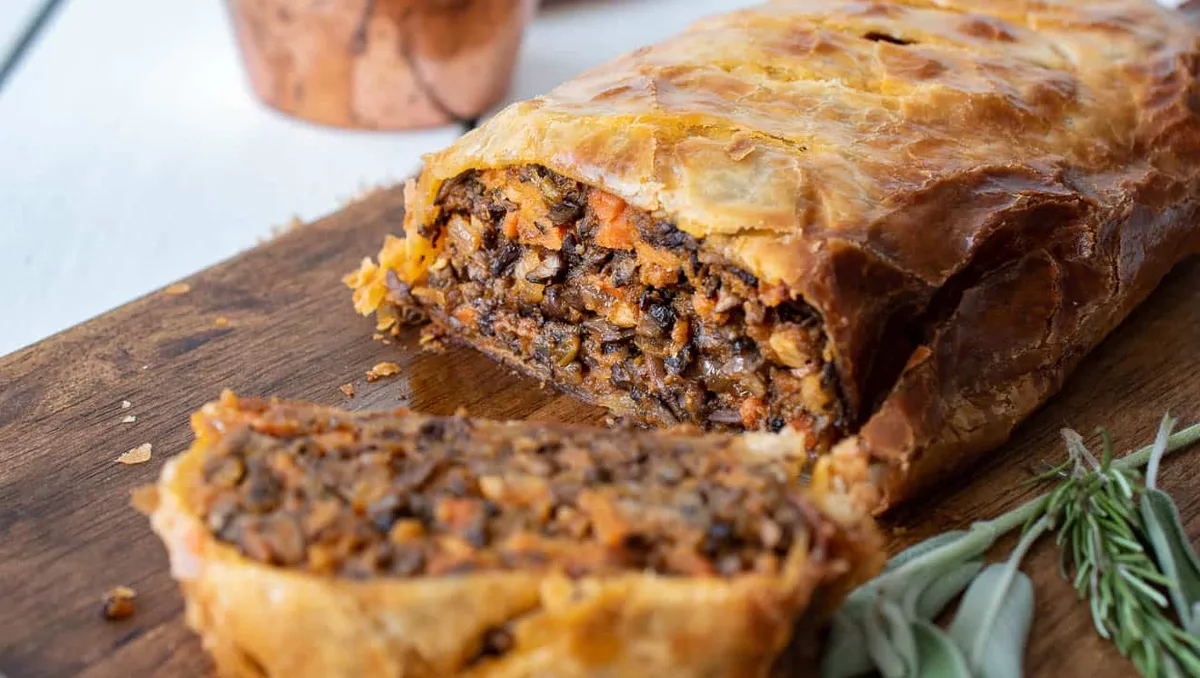
The Wellington is the vegetarian main that makes even the turkey people ask for a slice. A savoury mushroom filling wrapped in flaky puff pastry, baked until deep golden — it slices into beautiful spirals and takes gravy like a champ.
How to make it: Cook finely chopped mushrooms with onion, garlic, thyme, and a splash of soy sauce until completely dry — this part matters, wet filling means soggy pastry. Stir through chopped walnuts, spinach, and breadcrumbs, then cool completely. Spoon the filling down the centre of a puff pastry sheet, fold and seal, brush with beaten egg or milk, and score the top. Bake at 400°F for 35–40 minutes until puffed and deeply golden.
Tip: Assemble it a day ahead and keep it wrapped in the fridge — it actually slices more neatly baked straight from cold.
Conclusion
That is the fun of Thanksgiving dinner ideas — there really is no single right answer. Pick the main that fits your table, your oven space, and your energy this year, whether that is the full classic turkey or a slow cooker breast that cooks while you watch the parade. The people around the table are the point; dinner just has to be warm, generous, and shared.