
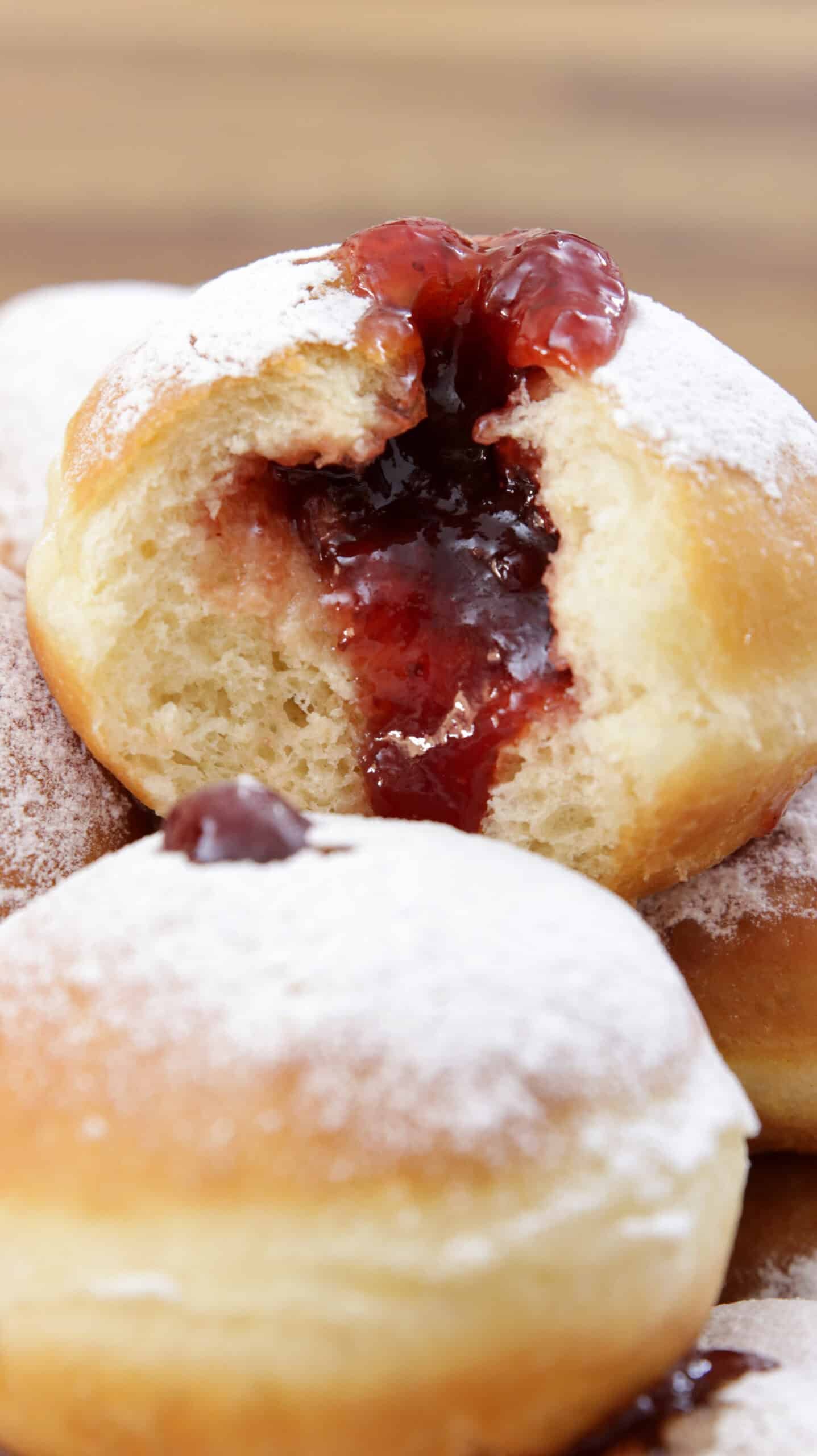
Sufganiyot Recipe: Fluffy Hanukkah Jelly Doughnuts with Strawberry Jam
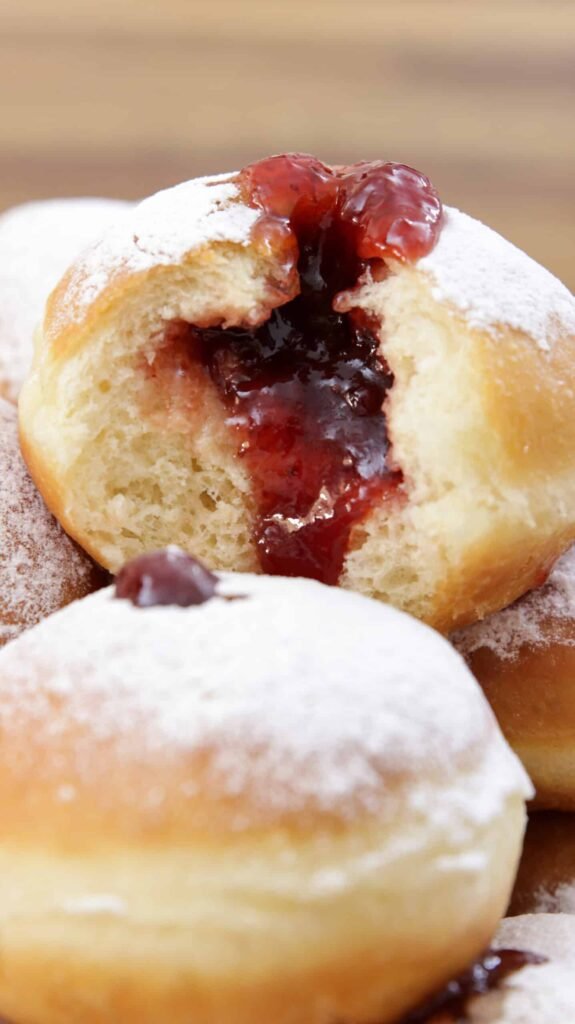
This sufganiyot recipe makes the softest, pillowiest Hanukkah jelly doughnuts you will ever pull out of a pot of oil — golden on the outside, cloud-soft on the inside, and filled with a spoonful of strawberry jam that oozes out with the first bite.
Sufganiyot are the doughnuts of Hanukkah. Fried in oil to celebrate the miracle of the oil that burned for eight days, they show up on every holiday table in Israel and in Jewish homes around the world — and honestly, they deserve a place on yours too, holiday or not. This version comes from David Davidov of The Cooking Foodie, a family recipe he first published in 2020 and has kept refining ever since. It uses just 10 simple ingredients, most of which are already in your pantry, and the dough comes together in a stand mixer with no complicated technique.
If you are planning your Hanukkah table this year, save this one now — and while you are in the holiday spirit, our Hanukkah nails for 2026 are the perfect finishing touch for the season. Hanukkah 2026 begins at sundown on Friday 4 December and runs through Saturday 12 December, so there is plenty of time to fry a batch (or three).
Credit: @thecookingfoodie via Instagram
Why You Will Love These Sufganiyot
Some jelly donuts are heavy. These are not. The dough is enriched with milk, eggs and a little oil, which gives it a soft, brioche-like crumb — light enough that you will reach for a second one before you have finished the first.
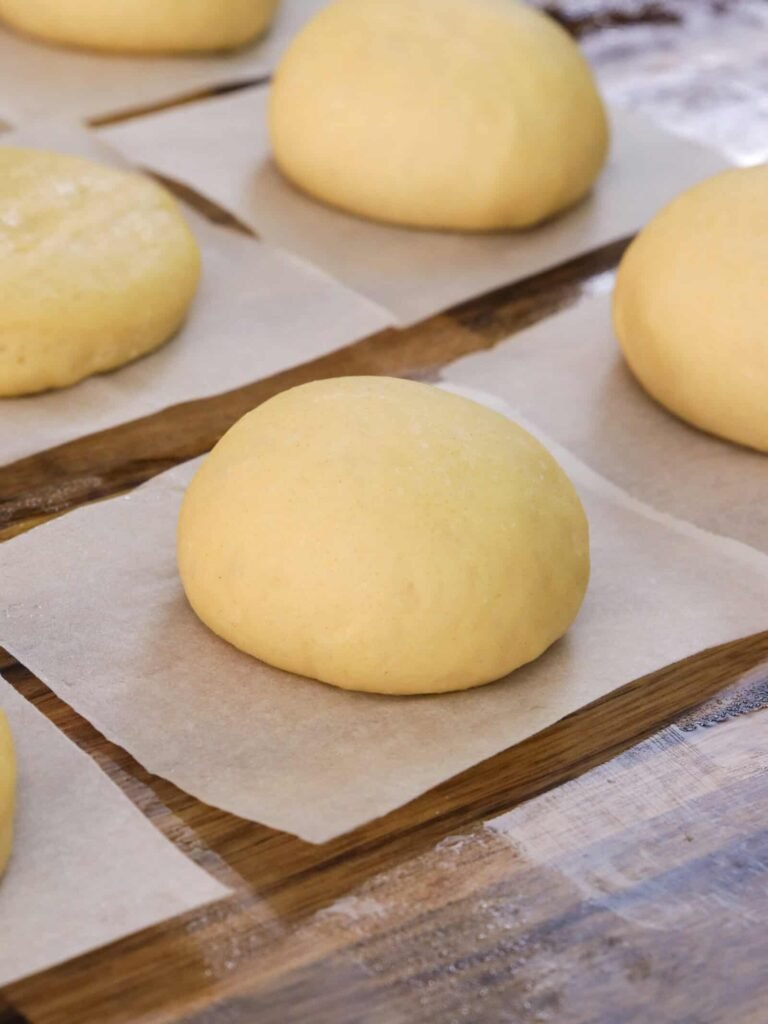
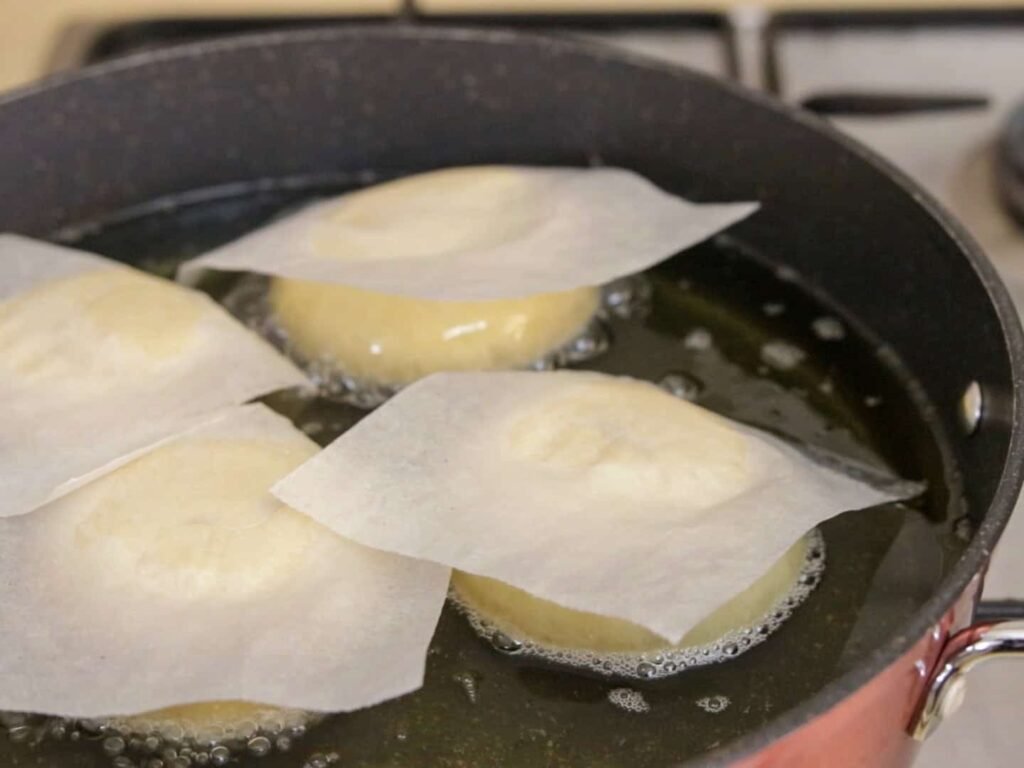
The recipe is also genuinely forgiving. Instant yeast goes straight into the flour with no proofing, the dough rises in about an hour, and the shaping is as simple as rolling balls. The one trick that makes the biggest difference is David’s parchment-square method: each ball rises on its own little square of parchment, and you lower the whole thing into the oil, paper and all. The paper floats off on its own, and your doughnuts stay perfectly round instead of deflating under your fingers.
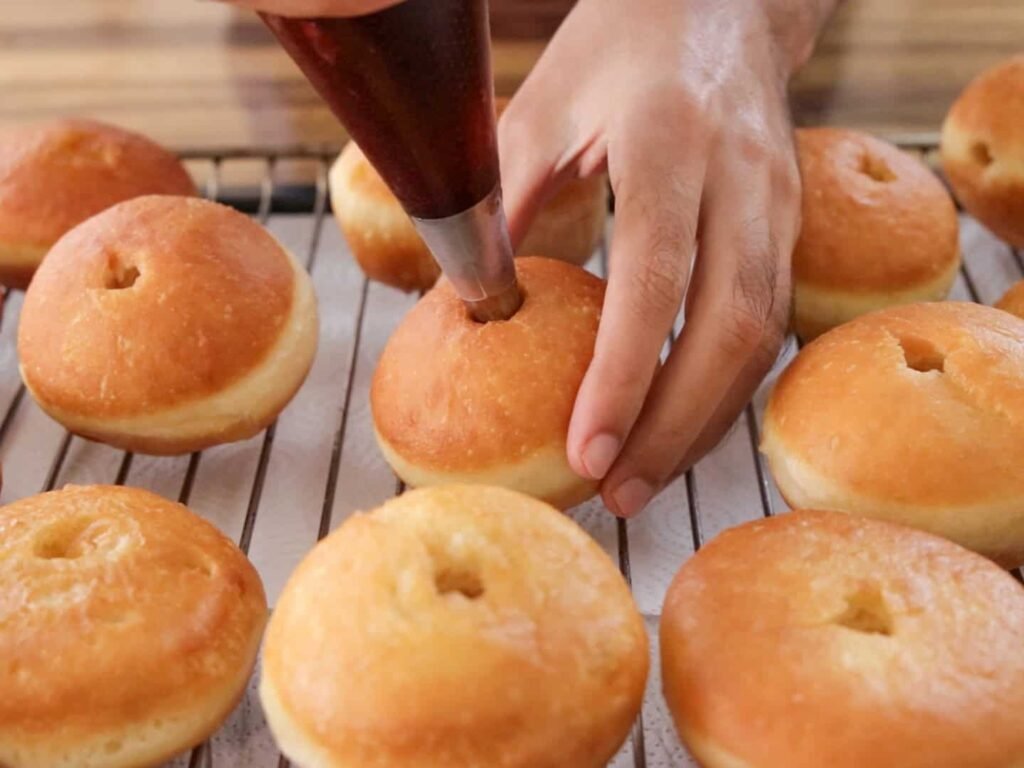
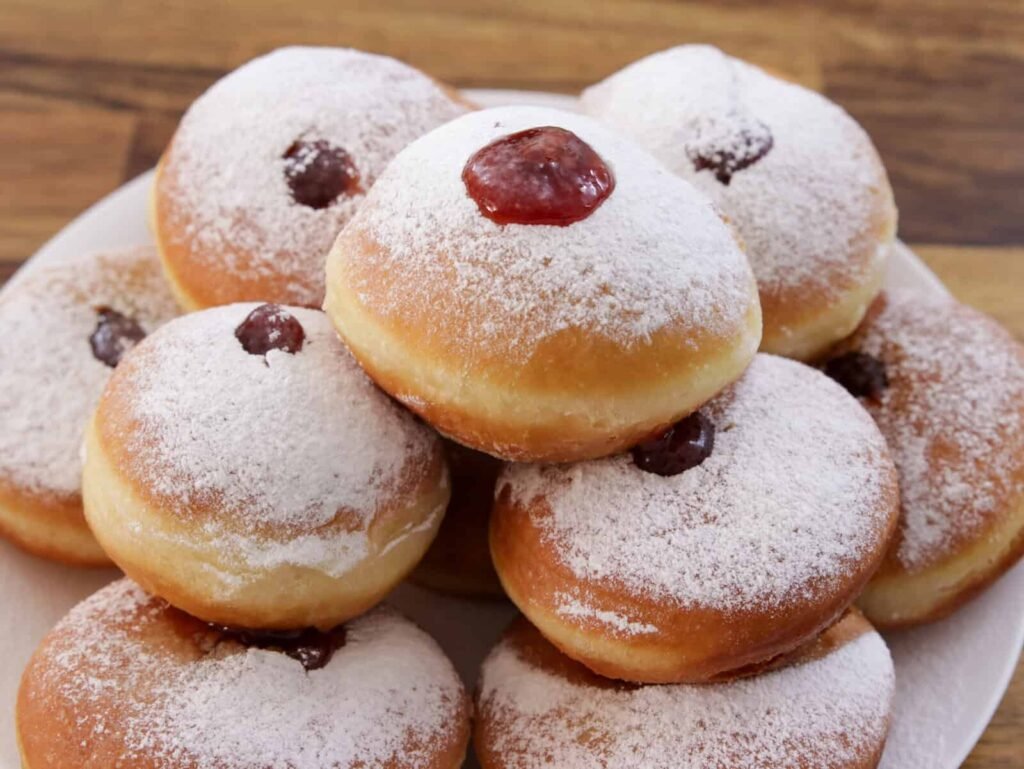
And then there is the filling. A skewer, a piping bag, and 1–2 tablespoons of jam per doughnut is all it takes. Strawberry is the classic, but the recipe works with any jam you love — and a heavy dusting of powdered sugar on top is non-negotiable.
The Creator Behind the Recipe
This recipe comes from David Davidov, the self-taught cook and baker behind The Cooking Foodie (@thecookingfoodie on Instagram). David started his YouTube channel in 2017 and launched his blog in 2018, and has since developed over 1,000 recipes tested by home cooks around the world. His sufganiyot are a family recipe — one he originally published in 2020 and has updated with new photos and success tips, most recently in November 2026. He shared the step-by-step reel on Instagram on 18 November 2026, just in time for the Hanukkah season.
What Are Sufganiyot?
Sufganiyot (singular: sufganiyah, pronounced “soof-gah-NEE-yah”) are iconic Israeli jelly-filled doughnuts traditionally enjoyed during Hanukkah. Deep-fried until golden, light and pillowy, they are most commonly filled with strawberry or raspberry jam and dusted generously with powdered sugar. The word comes from the Hebrew root sfog, meaning “sponge” — a nod to the doughnut’s soft, airy interior.
Though they are strongly associated with Israel today, sufganiyot trace back to Central and Eastern Europe, where jelly-filled doughnuts — ponchiks or berliners — were common holiday treats. When Jewish communities brought these pastries to the Levant, they evolved into the sufganiyot we know now. As the modern State of Israel was forming in the early 20th century, sufganiyot became the official Hanukkah treat, thanks in part to labour unions supporting local bakers who needed steady work in the winter months. Today they are a core part of the holiday, symbolising the miracle of the oil that burned for eight days in the Temple.
That is also what makes them one of the best Hanukkah desserts to make at home: every sufganiyah is a small, delicious reminder of the story behind the holiday.
What to Know Before You Start
The splash of alcohol is worth it. A tablespoon of vodka, brandy or whisky in the dough helps the sufganiyot fry up crisp on the outside and light on the inside, and prevents excess oil absorption. It evaporates completely during frying, so you will not taste it and the doughnuts stay kid-friendly. Vodka leaves no flavour behind; brandy or whisky add a touch of warmth. You can skip it and still get good results.
Rise the dough balls on parchment squares. This is David’s signature trick and it genuinely matters. Sufganiyot dough is soft and delicate, and lifting the rounds by hand can deflate them or stretch them out of shape. Cut small parchment squares, let each ball proof on one, and lower them into the oil paper-side down. The parchment releases on its own after a few seconds.
Mind the oil temperature. The recipe card says 170°C (340°F), and the key range is 165–175°C. Too hot, and the doughnuts brown outside before cooking through; too cool, and they absorb oil and turn heavy. A thermometer takes the guesswork out.
Milk or water — your call. Milk gives a richer, softer doughnut; water gives a slightly lighter dough and keeps them dairy-free. Both work.
Credit: @thecookingfoodie via Instagram
How They Come Together
The recipe has four simple stages, and most of the time is just waiting for the dough to rise:
1. Make the dough (about 10 minutes of work). Combine flour, sugar, yeast and salt in a stand mixer, add warm milk, oil, eggs and vanilla, and knead for 8–10 minutes until smooth. Add the alcohol and knead 2 minutes more. Then let the dough rise in a lightly oiled bowl until doubled — about an hour.
2. Shape and proof (about 40–60 minutes). Punch the dough down and divide it into equal pieces of about 50–60 g each. Roll each piece into a smooth, tight ball, place on parchment squares, cover, and let rise until puffy and doubled.
3. Fry (about 20 minutes). Heat the oil to 170°C (340°F) and gently lower the dough balls in with their parchment. Fry 1–2 minutes per side until golden, then drain. Fry in small batches — crowding the pot drops the oil temperature and leads to greasy doughnuts.
4. Fill and dust. Poke a hole with a skewer, pipe 1–2 tablespoons of jam into each warm sufganiyah, and dust generously with powdered sugar. Best served warm.
That is the whole recipe. Ten ingredients, one stand mixer, sixteen doughnuts.
Credit: @thecookingfoodie via Instagram
Tips for the Best Sufganiyot
- Roll balls, don’t cut rounds. You can shape sufganiyot either way, but rolling small dough balls by hand creates doughnuts that are fluffier, more uniform and naturally round — and they hold their shape much more easily while proofing and frying.
- Don’t overcrowd the pot. Fry in small batches so the doughnuts have space to puff up and cook evenly. Crowding lowers the oil temperature, which is the fastest route to greasy sufganiyot.
- Drain on a wire rack, not paper towels. Paper can trap steam and soften the crisp exterior. (The recipe card says paper towels; the creator’s own tips section recommends a wire rack — either way, don’t let them sit in their own steam.)
- Fill while warm. Jelly spreads more easily into warm doughnuts without tearing the delicate crumb.
- Dust right before serving. Powdered sugar melts over time on warm pastries, so save the snowstorm for the moment they hit the plate.
- Let the eggs come to room temperature. Cold eggs don’t mix as easily into an enriched dough. Take them out of the fridge when you start.
Credit: @thecookingfoodie via Instagram
Easy Variations
- Different fillings: strawberry or raspberry jelly is the classic, but pastry cream, Nutella, lemon curd, pistachio paste, chocolate or vanilla pudding, dulce de leche, chocolate ganache or apple butter all work beautifully.
- Flavour the dough: add citrus zest or warm spices such as cinnamon or cardamom directly into the dough for a boost of flavour.
- Sparkly coatings: instead of powdered sugar, roll the warm doughnuts in cinnamon sugar, vanilla sugar or chai-spiced sugar. Roll them while they are still hot.
- Mini sufganiyot: make them bite-sized for parties. Like doughnut holes, they fry faster, are easy to fill, and are perfect for serving a crowd.
- Baked version: not traditional, but you can bake the dough instead of frying for a lighter take — about 10 minutes in a 375°F oven on a parchment-lined baking sheet, then brush with melted butter and roll in sugar.
Serving and Storing
Sufganiyot are at their very best fresh and warm, right after they have been dusted with powdered sugar. Serve them as the sweet centrepiece of a Hanukkah gathering, arranged on a festive platter alongside candles, gelt, and hot drinks like tea, coffee or hot chocolate. For a party, set up a “fill-your-own doughnut” bar with squeeze bottles of jams, pastry creams and Nutella so guests can choose their own flavours — it is the kind of interactive dessert table people remember. And if you are building a full holiday dessert spread, our Candied Mistletoe Cookies make a beautiful partner plate for the Christmas side of the season.
For storage, the creator is clear: sufganiyot are best the same day. Leftovers keep in an airtight container at room temperature for up to 1 day — avoid the fridge, which dries them out quickly. To refresh them, warm in a 300°F (150°C) oven for 5–7 minutes; the recipe card notes a quick 10–15 second warm-up works too. Never microwave them — it makes them tough and rubbery.
You can also freeze unfilled, undusted sufganiyot: once completely cool, place them in a single layer on a baking sheet until firm, then transfer to a freezer bag and freeze for up to 1 month. Thaw at room temperature, warm briefly in the oven, then fill and dust.
Credit: @thecookingfoodie via Instagram
Frequently Asked Questions
What is the difference between sufganiyot and regular doughnuts?
Sufganiyot are traditionally round, jelly-filled doughnuts eaten during Hanukkah to honour the miracle of the oil. Regular doughnuts come in many shapes and styles, often with holes and a wide variety of glazes, fillings or toppings. All sufganiyot are doughnuts, but not all doughnuts are sufganiyot.
How do you pronounce sufganiyah?
“Soof-gah-NEE-yah.”
Why do people eat sufganiyot on Hanukkah?
Because they are fried in oil. Fried foods symbolise the Hanukkah miracle, when a small amount of oil — enough for just one day — miraculously burned for eight days in the rededicated Temple.
Can I use active dry yeast instead of instant yeast?
Yes. Use the same amount (1 tablespoon / 10 g). You can mix it directly into the dry ingredients, or proof it first in warm liquid for 5–10 minutes if you want to be sure it is active.
Can I make sufganiyot without alcohol?
Yes — the tablespoon of vodka, brandy or whisky is optional. It helps the doughnuts fry up crisp outside and light inside and prevents excess oil absorption, but you can skip it and still get good results.
Can I bake them instead of frying?
You can, though it is not traditional. Bake on a parchment-lined baking sheet for about 10 minutes in a 375°F oven, then brush with melted butter and roll in sugar.
How many doughnuts does this recipe make?
Sixteen doughnuts, from dough pieces of about 50–60 g each.
How long do sufganiyot keep?
They are best the day they are fried. Leftovers keep in an airtight container at room temperature for up to 1 day. Unfilled, undusted sufganiyot can be frozen for up to 1 month.
Classic Sufganiyot Recipe (Best Hanukkah Jelly Donuts)
Ingredients
Method
- Make the dough: In a stand mixer, combine flour, sugar, yeast, and salt. Add warm milk, oil (or melted butter), eggs, and vanilla. Knead for 8–10 minutes until smooth, then add the alcohol and knead 2 minutes more.
- Place the dough in a lightly oiled bowl, cover, and let rise until doubled. About one hour.
- Shape: Punch down the dough and divide into equal pieces (about 50-60g each). Roll each piece into a smooth, tight ball and place on a lightly greased or parchment-lined tray.
- Cover and let rise until puffy and doubled, about 40–60 minutes.
- Fry: Heat oil to 170°C (340°F). Gently lower the dough (with the parchment) into the oil. Fry 1–2 minutes per side until golden. Transfer to paper towels to drain.
- Fill & Serve: Poke a hole with a skewer, pipe 1-2 tablespoons jam into each sufganiyah, and dust with powdered sugar. Best served warm.
Notes
- Why alcohol? A tablespoon of vodka/brandy prevents excess oil absorption. It evaporates during frying, you won’t taste it.
- Milk vs. water: Milk → richer, softer donuts. Water → slightly lighter dough.
- Oil temperature is key: Keep oil between 165–175°C. Too low = greasy. Too high = brown outside, raw inside.
- Parchment squares: Place each dough circle on a small square of parchment; it prevents sticking and keeps the donuts perfectly shaped. The paper releases instantly in the oil.
- Yeast: This recipe is written for instant dry yeast, which can be mixed directly into the flour with no proofing. If you only have active dry yeast, use the same amount (1 tablespoon/10g). You can mix it in directly or proof it in warm liquid for 5–10 minutes if you want to ensure it’s active.
- Storage: Best the same day. Store in an airtight container up to 1 day; warm 10–15 seconds before serving. Avoid the fridge (dries them out).
- Nutrition (per serving): Calories 194 kcal, Carbohydrates 26 g, Protein 4 g, Fat 8 g, Saturated fat 1 g, Polyunsaturated fat 2 g, Monounsaturated fat 4 g, Trans fat 0.03 g, Cholesterol 21 mg, Sodium 149 mg, Potassium 57 mg, Fiber 1 g, Sugar 4 g, Vitamin A 45 IU, Vitamin C 0.001 mg, Calcium 21 mg, Iron 1 mg.


One Comment