Crispy Potato Latkes (Classic Hanukkah Recipe)
Latkes are the undisputed stars of Hanukkah — golden, lacy potato pancakes, shatteringly crisp at the edges and tender in the middle, eaten hot from the pan with a dollop of sour cream or a spoonful of applesauce.
If there is one food that is Hanukkah, it is the latke. Fried in oil, latkes celebrate the miracle of the oil that burned for eight days in the Temple — and this version, from Ari Laing of Well Seasoned Studio, is her mother-in-law’s famous family recipe, the one her family looks forward to every single year. Ari calls them the best potato pancakes on the planet, and with a 5-star rating from 19 reviews on her blog, her readers seem to agree.
Hanukkah 2026 begins at sundown on Friday 4 December and runs through Saturday 12 December, so now is the time to practise your frying. And if you are building the full holiday table, our sufganiyot recipe brings the sweet fried doughnuts for dessert, while our Hanukkah decor ideas for 2026 will get the table looking the part.

Why You Will Love These Latkes
These are not the pale, soft potato pancakes you might remember from a diner. Ari’s latkes are deliberately thin and lacy, fried in a shallow pool of hot oil so the shredded potato strands turn deep golden brown and crisp — “1000x better than any frozen, store-bought variety,” in her words.
The recipe is also refreshingly simple. Just eight ingredients, most of them already in your kitchen: russet potatoes, sweet onions, eggs, matzo meal, salt, baking powder and pepper, plus oil for frying. There is no fancy equipment and no long rise — the work is in two techniques, and both are easy once you know them: wash the grated potatoes until the water runs clear, then squeeze them bone dry. Do those two things and crispiness is practically guaranteed.
And then there is the serving. Ari is firmly team sour cream, but the classic pairing is both: cool sour cream and sweet-tart applesauce side by side, so everyone at the table can pick their side. For a party, she dresses them up with crème fraîche, thin slices of smoked salmon and caviar or trout roe.
The Creator Behind the Recipe
This recipe comes from Ari Laing (Ariel Laing), the former New York City line cook — she trained at Perilla and Perry St — behind Well Seasoned Studio (@wellseasonedstudio on Instagram). Ari founded the blog in 2017 and has shared more than 800 tested recipes since, with more than 200,000 home cooks following along on social. Her latkes post, first published in December 2017 and updated in October 2026, is one of her reader favourites — she calls it one of her top 10 recipes of all time. The recipe itself comes from her mother-in-law, who Ari says makes the best potato pancakes on the planet. Photography on the post is by Megan McKeehan.
What Are Latkes?
Latkes (Yiddish for “pancake”) are pan-fried potato pancakes from Ashkenazi Jewish cooking, traditionally eaten during Hanukkah. Grated potato and onion are mixed with egg and a little matzo meal or flour, then fried in hot oil until crisp and golden. They are the savoury counterpart to sufganiyot on the Hanukkah table — both fried in oil to honour the Hanukkah miracle, one sweet, one savoury.
A good latke walks a line: crisp and lacy on the outside, soft and fluffy inside, never greasy. The trick, as every latke cook will tell you, is getting the water out of the potatoes before they hit the pan — which is exactly what this recipe is built around.
What to Know Before You Start
Wash the potatoes three times. This is the step that sets Ari’s recipe apart. After grating, the potatoes soak in warm water for 10 minutes, then get drained and re-covered — three times in total. You are done when there are very few bubbles at the top of the bowl. The washing releases excess starch, which is what makes latkes gummy instead of crisp.
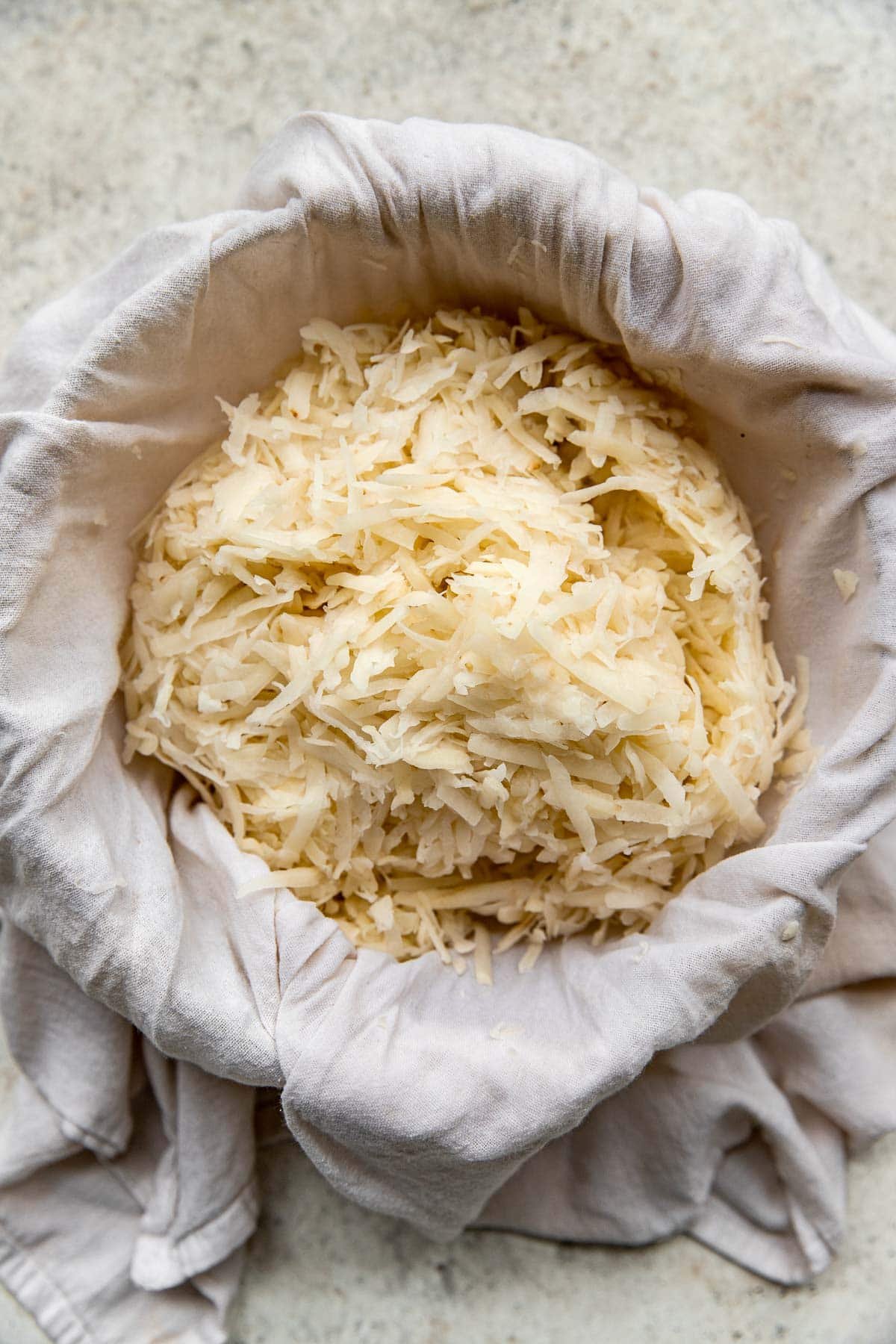
Squeeze them dry — really dry. Working in batches, wring the grated potatoes out in a cheesecloth, a kitchen towel, or even an old pillowcase (her mother-in-law’s method). The drier the mixture, the crispier the latke. If you do not want to squeeze, you can press the mixture in a colander with a heavy object instead.
Use russet potatoes. Russets (or Idaho potatoes) are the best choice because they are high in starch and low in moisture, which helps them hold their shape and crisp up when fried.
Fry in a light, neutral oil. Grapeseed, canola, avocado or vegetable oil — anything with a high smoke point. Not extra virgin olive oil, which will smoke. You need enough oil to come up about halfway the height of the latke, and you will likely need to top it up between batches.
Keep them thin. Drop just 1–2 tablespoons of batter per latke and pat it down with the back of a spoon. Thin latkes crisp all the way through; thick ones stay soft in the middle.
How They Come Together
The recipe has five simple stages, and most of the 80 minutes is soaking and frying in batches:
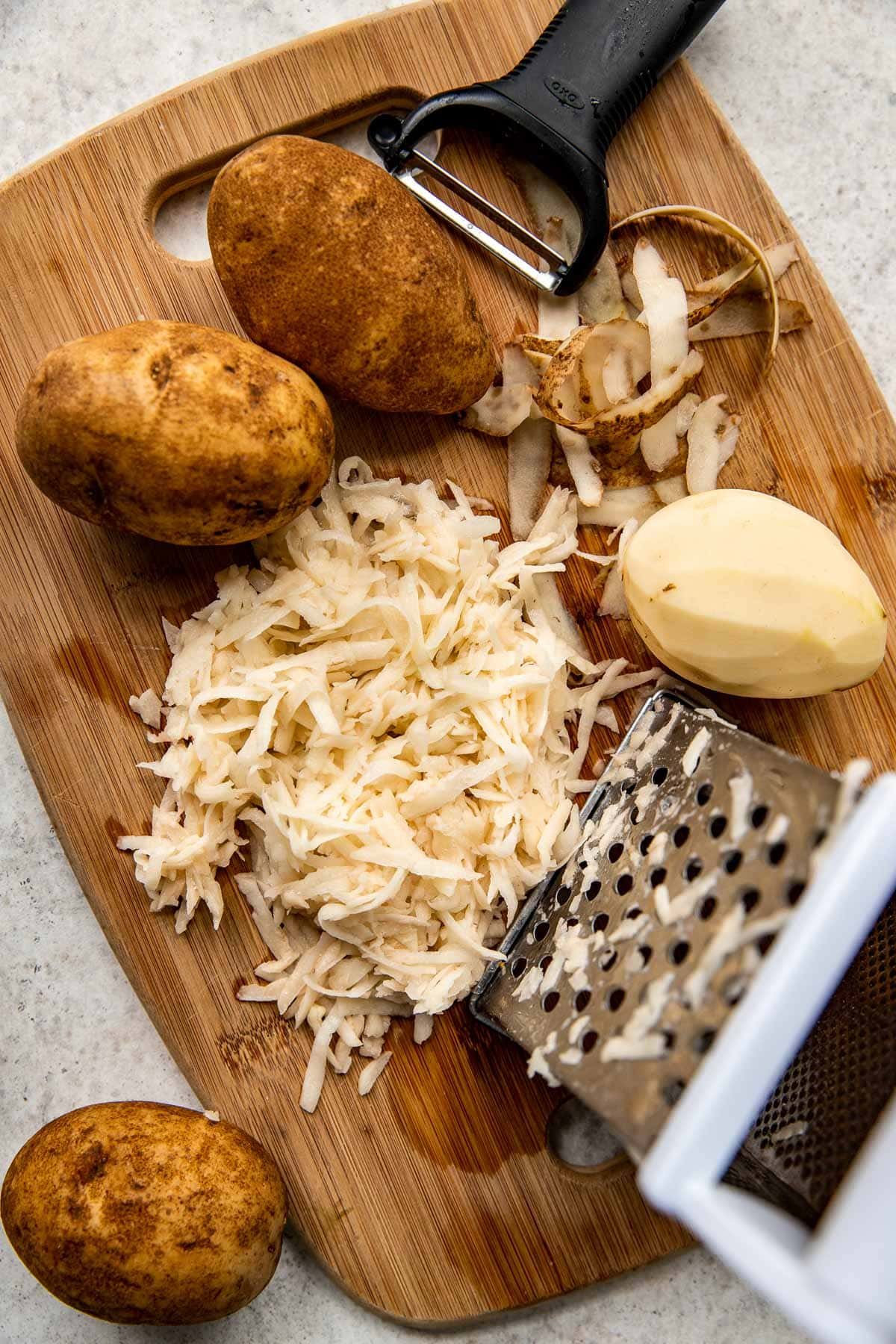
1. Grate and wash (about 30 minutes of soaking). Peel and finely grate the potatoes, then soak them in warm water for 10 minutes. Drain and repeat three times in total, until the water is clear and there are very few bubbles.
2. Squeeze dry. Wring the grated potatoes out in batches in a cheesecloth, towel or old pillowcase until as dry as you can get them. Grate the onions and wring them out too.
3. Mix. Combine the potatoes and onion with most of the eggs (start with three-quarters, reserve the rest), matzo meal, salt, baking powder and pepper. If the mixture seems too dry, add more egg a little at a time.
4. Fry (about 25 minutes). Heat oil about ½ inch deep in a cast-iron or heavy-bottomed skillet to 400°F (204°C). Drop in 1–2 tablespoons of batter per latke, pat thin, and fry 2–3 minutes per side until deep golden brown. Do not flip until the first side is crispy, and do not crowd the pan.
5. Drain and salt. Transfer to a paper towel-lined cooling rack and sprinkle with kosher salt immediately. Serve hot with applesauce and sour cream.
That is the whole recipe. Eight ingredients, one skillet, six servings.
Tips for the Crispiest Latkes
- Do not flip early. You will know a latke is ready to turn when the edges are darkening and the first side is deep golden brown and crisp. Flipping too soon breaks the crust — and the latke.
- Flip with a fork or a spoon, not tongs. Tongs can damage and break apart the delicate pancake. A fork or spoon slides underneath cleanly.
- Do not crowd the pan. Crowding drops the oil temperature, and lukewarm oil makes greasy, soggy latkes. Fry in batches, and let the oil come back up to temperature between them.
- Salt the second they leave the pan. A sprinkle of kosher salt on hot, freshly drained latkes sticks and seasons them all the way through. Wait, and it just slides off.
- Drain on a wire rack, not a flat plate. The recipe card says to transfer latkes to a paper towel-lined cooling rack — air circulates underneath and the bottoms stay crisp instead of steaming soft.
- Use two skillets. Ari’s own tip: run two cast-iron or heavy-bottomed skillets at once and you will get through the batch in half the time.
- Grate by hand or use a food processor. Ari prefers hand-grating, but a food processor makes the prep super quick — either way works.
- Keep the finished batch warm. Hold fried latkes on baking sheets in a 250°F (121°C) oven while you fry the rest, so the first batch is still hot and crisp when the last one comes out of the oil.

Serving and Storing
Latkes are at their very best hot from the pan, within minutes of frying. Serve them piled on a platter with a bowl of applesauce and a bowl of sour cream — Ari’s own homemade cinnamon applesauce if you want the full treatment — and let everyone build their own plate. For a holiday party, add her dressed-up toppings: a dollop of crème fraîche, thin slices of smoked salmon and a little caviar or trout roe.
For storage, the creator is clear that latkes are a make-ahead cook’s friend:
- Fridge: latkes can be made ahead and stored in the refrigerator for a few days. Leftovers keep in airtight containers for up to 3 days (Ari notes she has kept them for up to a week when she doubles or triples the batch).
- Reheating: place on a baking sheet and warm at 350°F (177°C) for 10–15 minutes, or until heated through.
- Freezer: latkes freeze for up to 3 months. Cool completely, place on a parchment-lined baking sheet and freeze for 2–3 hours until solid, then transfer to a freezer-safe bag or container.
- Reheating from frozen: thaw overnight in the refrigerator, then bake at 350°F (177°C) for 10–15 minutes, or until warm.
Never microwave them to reheat — the oven is what brings the crunch back.

Frequently Asked Questions
What are latkes?
Latkes are crispy pan-fried potato pancakes from Ashkenazi Jewish cooking, made from grated potatoes and onion mixed with egg and matzo meal or flour. They are the classic savoury food of Hanukkah.
Why do people eat latkes on Hanukkah?
Because they are fried in oil. Fried foods symbolise the Hanukkah miracle, when a small amount of oil — enough for just one day — miraculously burned for eight days in the rededicated Temple.
What kind of potatoes are best for latkes?
Russet (Idaho) potatoes. They are high in starch and low in moisture, which helps latkes hold their shape and fry up crisp. Ari uses 5 lbs of russets in this recipe.
Why do my latkes come out soggy?
Almost always, wet potatoes or oil that is not hot enough. Squeeze the grated potatoes until they are as dry as possible, fry in oil at 400°F (204°C), do not crowd the pan, and drain on a wire rack so steam escapes.
Can I use flour instead of matzo meal?
Yes. The creator says matzo meal can be substituted with potato starch or flour. With flour, the recipe is no longer gluten-free.
Can I make latkes ahead of time?
Yes — that is one of the best things about them. Make them ahead and refrigerate for a few days, or freeze for up to 3 months. Reheat on a baking sheet at 350°F (177°C) for 10–15 minutes until crisp again.
How many latkes does this recipe make?
The creator gives the yield as 6 servings and does not state a latke count — the number depends on how big you make them (the recipe uses 1–2 tablespoons of batter per latke). No count has been added here.
What do you serve with latkes?
Sour cream and applesauce are the classics. Ari also serves them with crème fraîche, smoked salmon and caviar or trout roe for parties.
Light & Crispy Potato Latkes
Ingredients
Method
- Peel and grate potatoes, then immediately place in a mixing bowl filled with warm water. Allow to sit for 10 minutes, then drain potatoes and re-cover with warm water, repeating the process a total of 3 times. You’ll know you’re done when there are very few bubbles at the top of the bowl.
- Squeeze out excess moisture. Working in batches and using a large cheese cloth, kitchen towel, or even an old pillow case, squeeze out all excess moisture from potatoes. Place drained potatoes in a large mixing bowl.
- Meanwhile, grate onions and ring out any excess water. Add onion to potatoes, along with most of the eggs (I’ll begin by using ¾ of them, reserving the rest), matzo meal, Kosher salt, baking powder, and black pepper, then mix well. If mixture seems too dry, add more egg a little at a time.
- Heat enough oil to fill a pan about ½”. When oil reaches 400°F (204°C), drop about 1–2 Tbsp of latke batter into pan, making sure not to crowd the pan. Use the back of a spoon to pat them down a bit (you want them thin!). Fry about 2–3 minutes per side, or until golden brown, then carefully turn and brown the other side for about 1–2 minutes.
- Drain on paper towels, then serve! Transfer latkes to a paper towel-lined cooling rack and immediately season with a sprinkle of Kosher salt. Repeat process with remaining latke mixture. Serve immediately or keep warm on baking sheets in an oven heated to 250°F (121°C). Serve with homemade applesauce or sour cream.
Notes
- Oil: Fry in a light, neutral oil (grapeseed, canola oil, avocado oil, or vegetable oil) — they have higher smoke points than extra virgin olive oil. You need enough oil to coat the bottom of the pan so it comes up about halfway the height of the latke. You will likely need to add additional oil between batches.
- Potatoes: Russet (or Idaho) potatoes are the best choice — high in starch and low in moisture, easier to grate and better at holding their shape.
- Flipping: Do not flip until the latkes are crispy on the first side. Use a fork or a spoon to flip — not tongs, which can damage and break apart the delicate potato pancake.
- Salting: As soon as you drain the latkes, sprinkle each lightly with salt, then enjoy hot!
- Eggs: Start with ¾ of the eggs and reserve the rest; add more egg a little at a time only if the mixture seems too dry.
- Inactive time: 30 minutes (soaking) — included in the total time.
- Storage: Make-ahead — latkes can be made ahead and stored in the refrigerator for a few days. Leftovers: refrigerate in airtight containers for up to 3 days (the creator notes she has kept leftovers for up to a week when doubling or tripling the batch). Reheat on a baking sheet at 350°F (177°C) for 10–15 minutes, or until heated through. Freeze for up to 3 months: cool completely, place on a parchment-lined baking sheet, freeze 2–3 hours until solid, then transfer to a freezer-safe bag or container. To reheat from frozen, thaw overnight in the refrigerator and then bake at 350°F (177°C) for 10–15 minutes, or until warm.
- Matzo meal / gluten-free: The creator lists the diet as Gluten Free and says matzo meal can be substituted with potato starch or flour. (Matzo meal itself contains gluten; the gluten-free claim is the creator’s own listing and is reported as given.)
- Nutrition (per serving): Calories 402 kcal, Carbohydrates 82 g, Protein 13 g, Fat 3 g, Saturated fat 1 g, Cholesterol 109 mg, Sodium 725 mg, Potassium 1683 mg, Fiber 6 g, Sugar 4 g, Vitamin A 158 IU, Vitamin C 24 mg, Calcium 119 mg, Iron 4 mg.
Recipe and photos by Ari Laing, Well Seasoned Studio (@wellseasonedstudio). Photography on the creator’s post by Megan McKeehan. Full recipe on the creator’s blog: https://www.wellseasonedstudio.com/latkes/